
Greece has a lot to offer! First, is a humble reminder that we are just a blip on earth’s timeline when you see the remains of civilization from 3000 BC. That’s more than 5,000 years ago! In Athens you will find the start of democracy, see where Apostle Paul preached, learn about mythology, walk amongst ancient ruins and experience modern life. Second, the food is really good. Connor ventured into Greek delicacies and found lots to like. He isn’t a picky eater, but he also to date has not been adventurous, maybe that has changed with this trip. Third, the people are very friendly with a welcoming service industry, which is a nice change from other European cities.
During our visit Connor learned (and Scott and I remembered from school studies) that Greece has had many lives, gods, leaders, languages and cultures throughout the centuries. One thing that is consistent when traveling in Europe, and learning about each city’s history, is that no municipality was safe from invaders, no matter the size. Greece was no different. And seeing its living history for 5-6 days you can see how these changes are present in modern day. Below I detail our trip the week after Christmas, in summary – great weather, amazing views, good food, new knowledge acquired and of course a bit of drama to keep us on our toes.
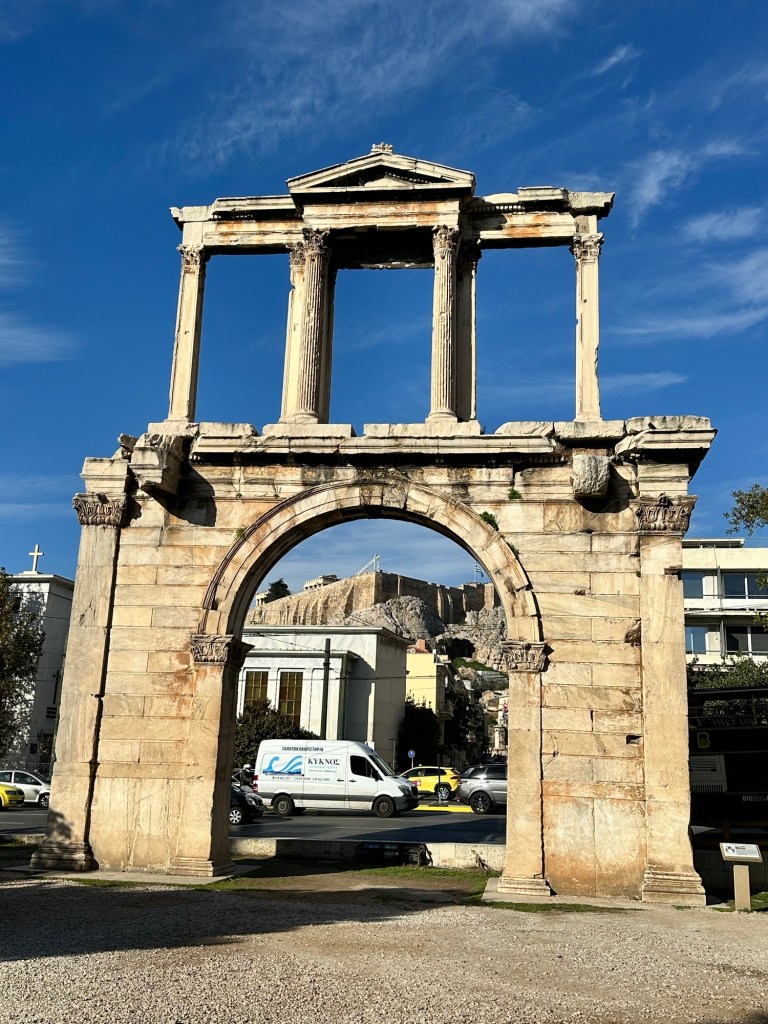
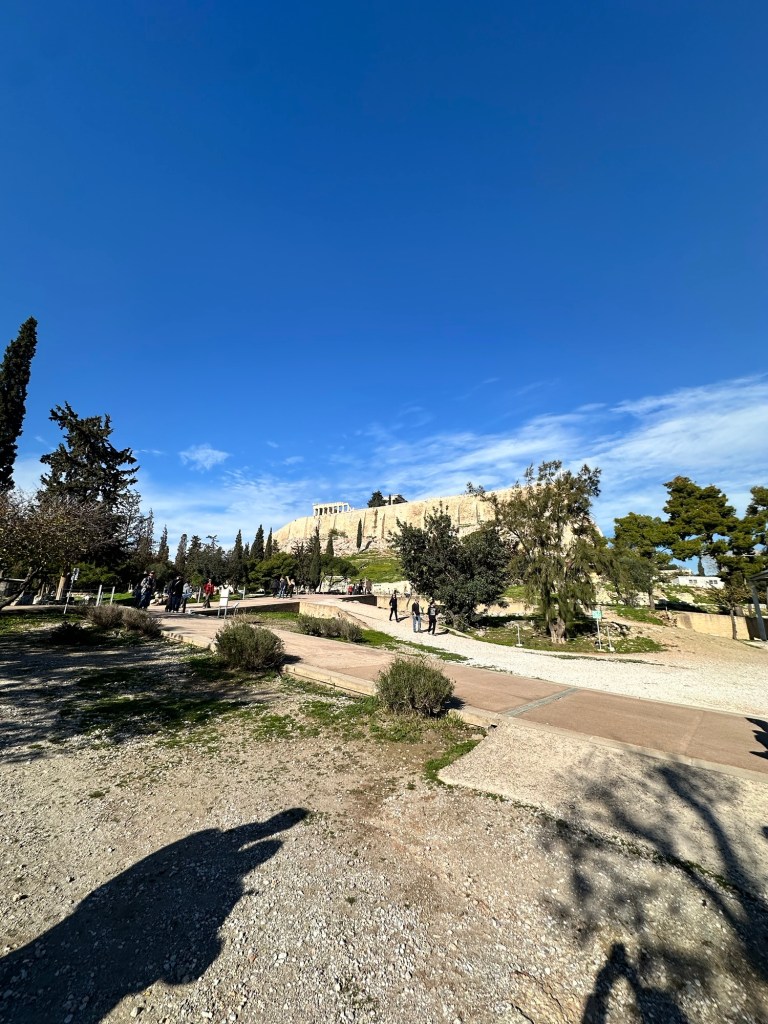
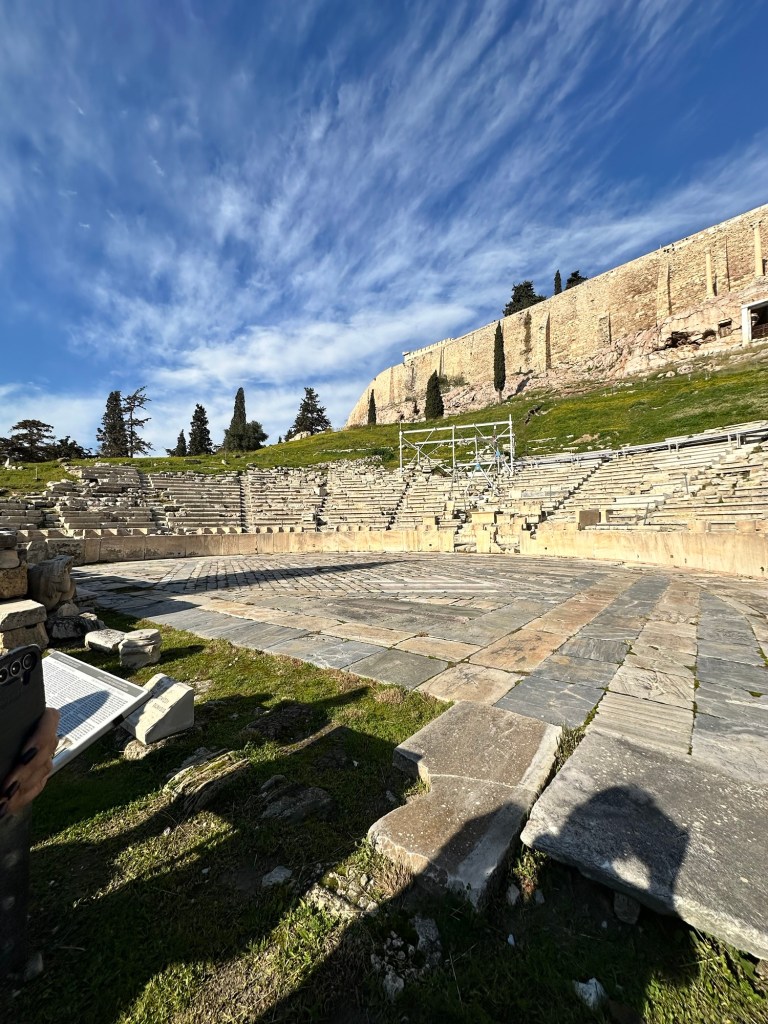
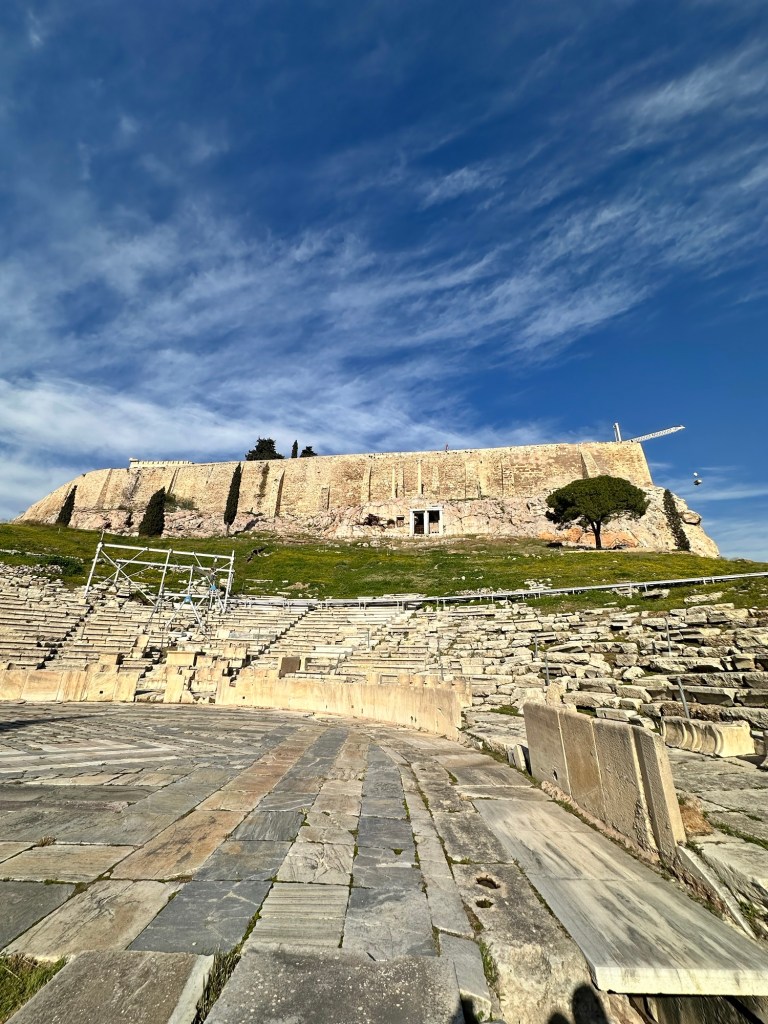
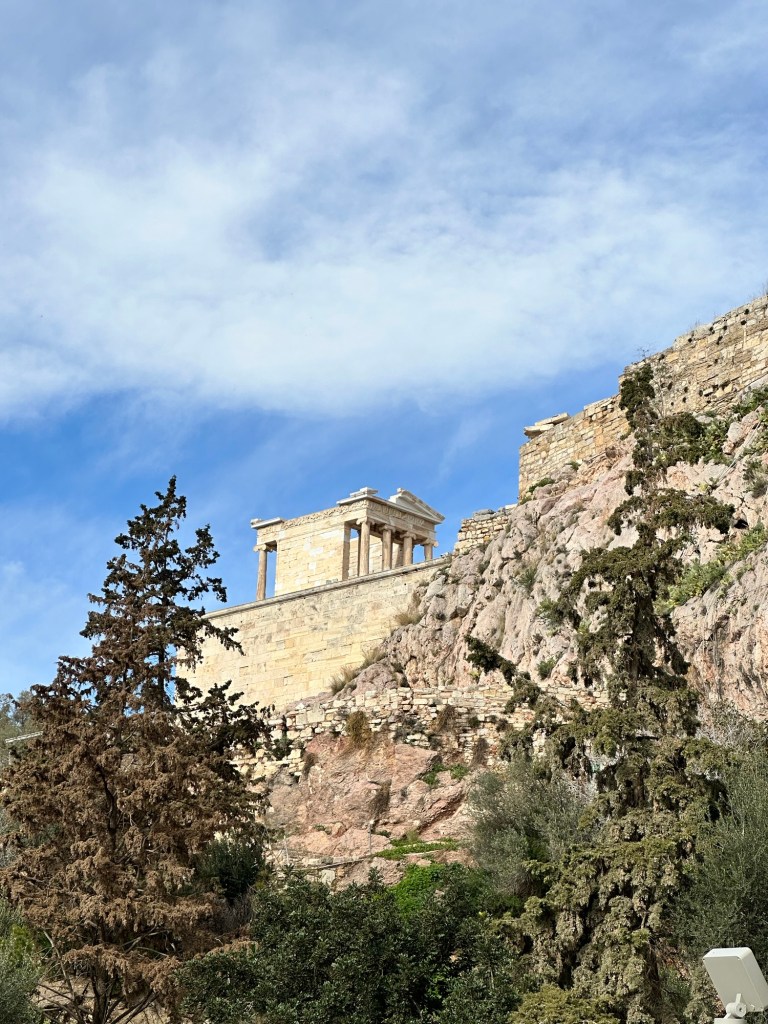
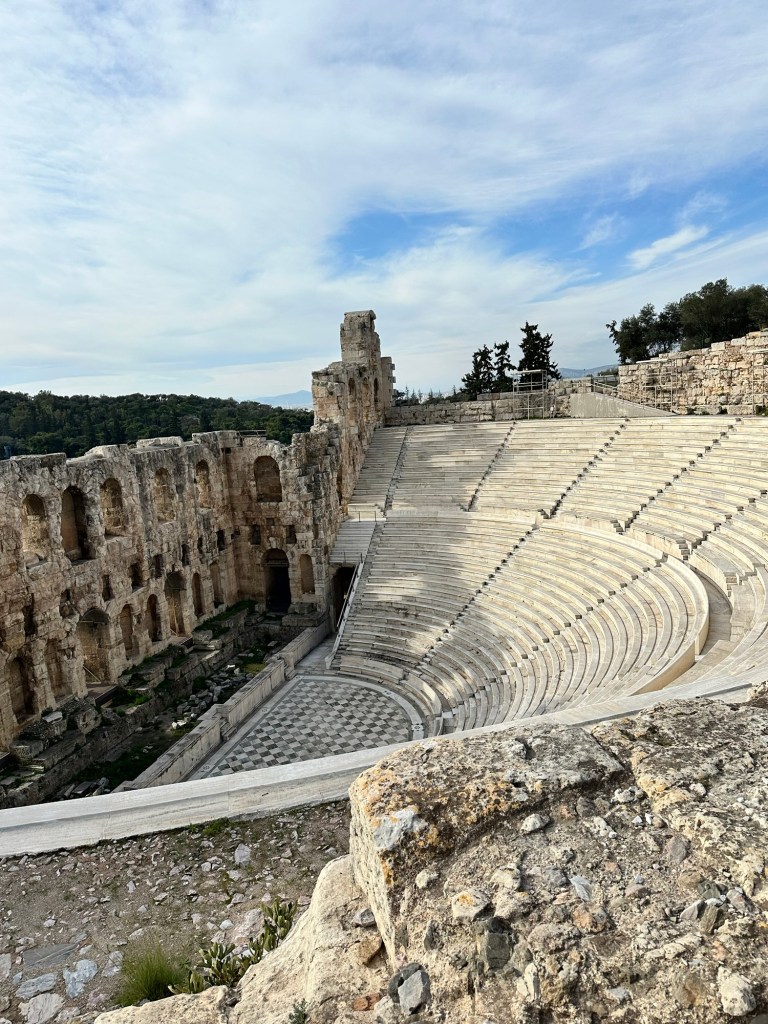
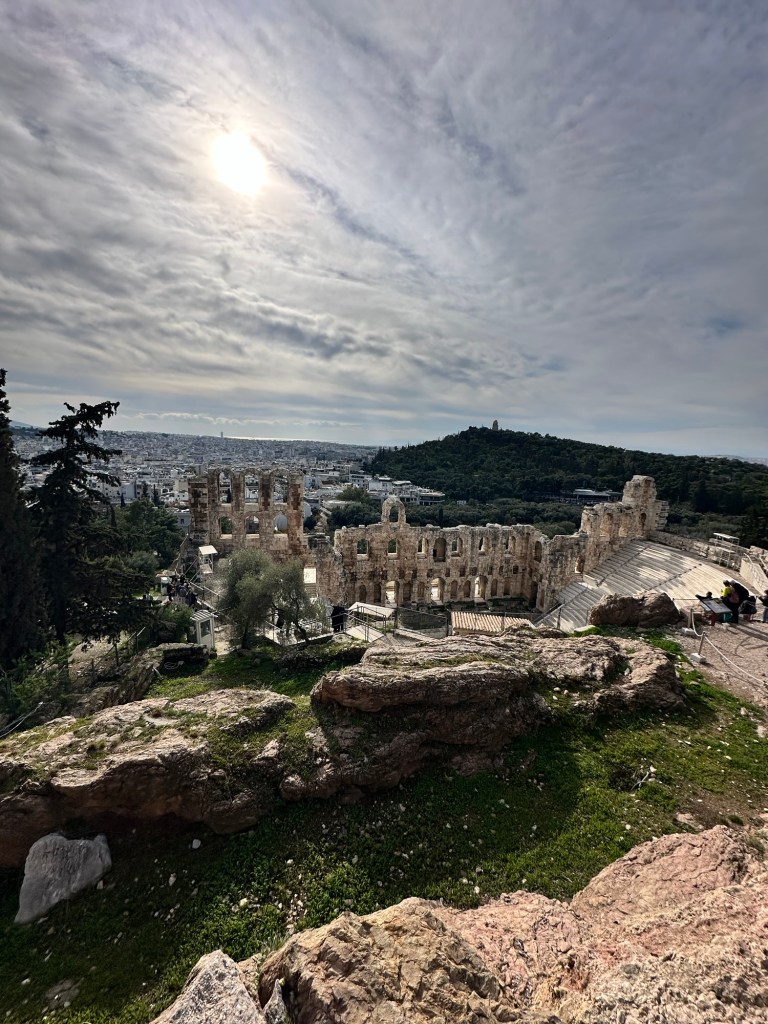
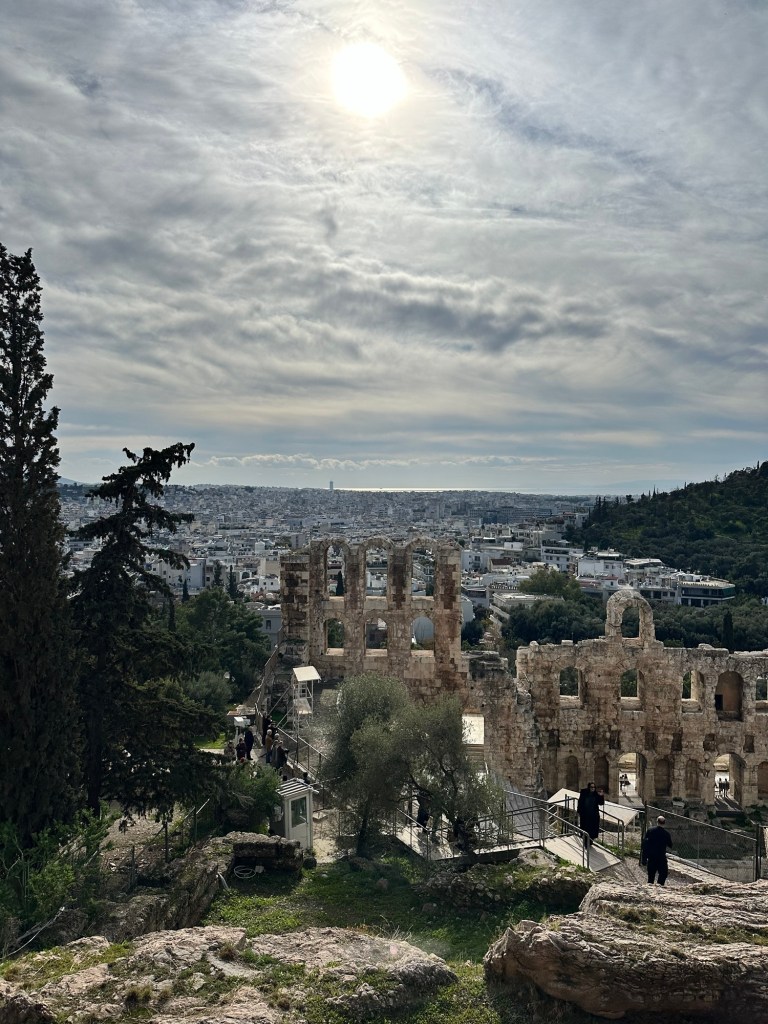
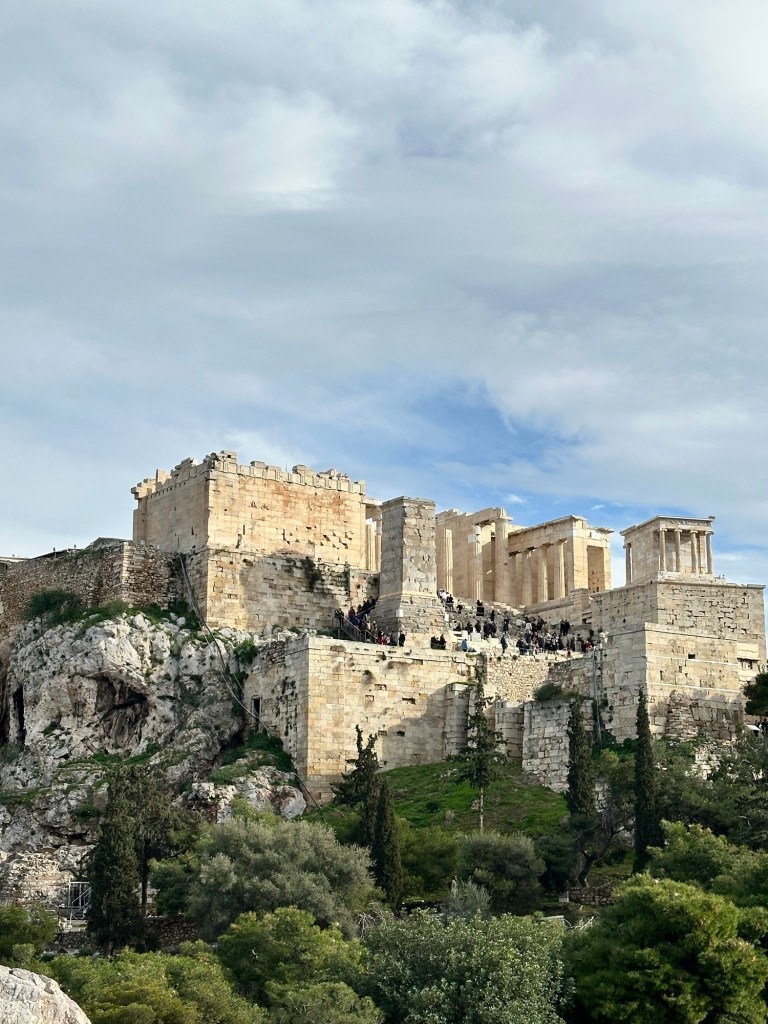
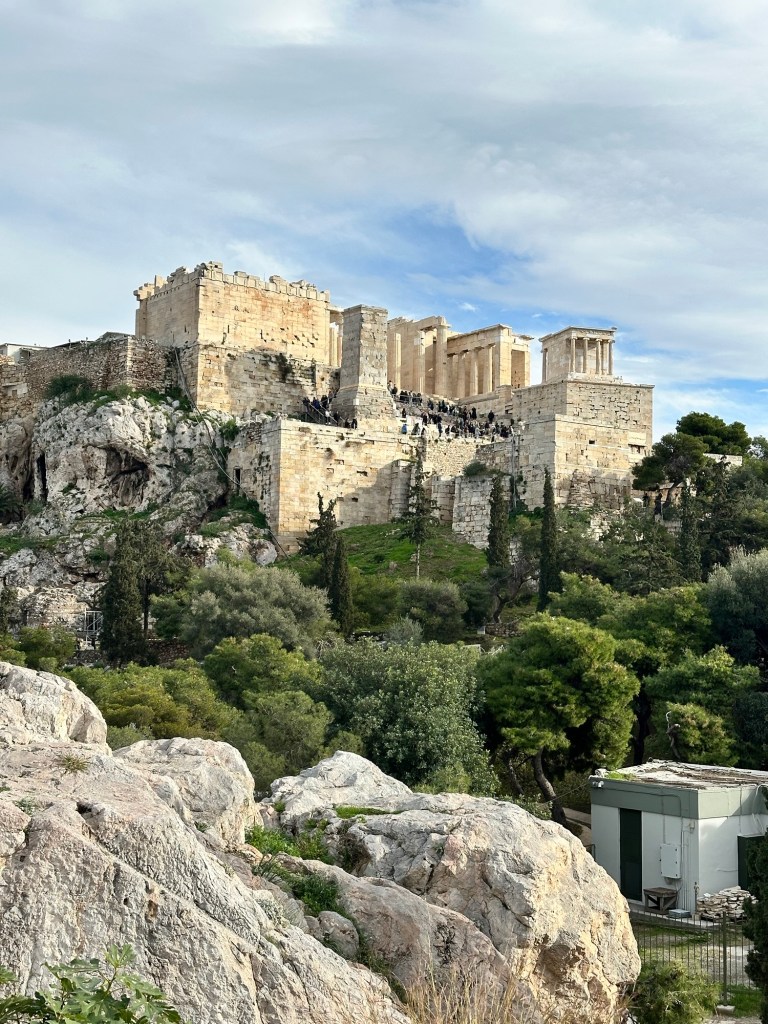
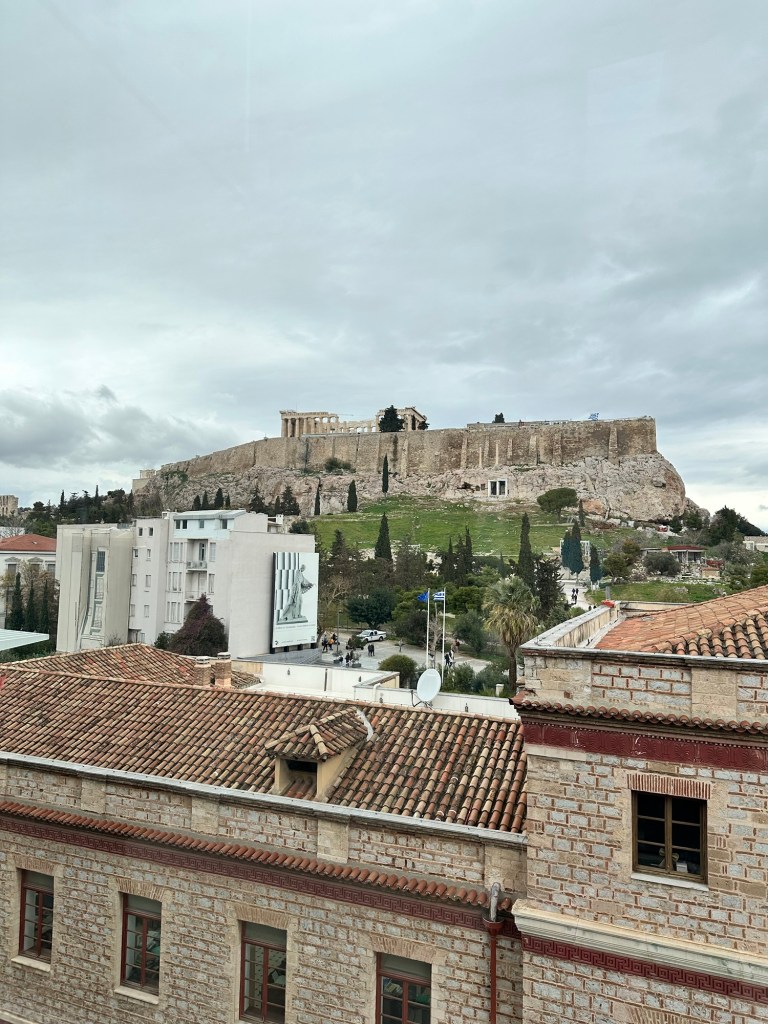
Our visit started with a tour of the Acropolis. We joined a tour group with a local Athenian walking us from the Arch of Hadrian up and into the Acropolis. What I liked about our tour guide was not only her knowledge, but you could tell this was personal for her. She is Greek, from Athens, and the Acropolis and the history it tells is in her DNA. That made the tour special. The walk up the hill was steep and rocky. Along the walk were many different monuments, which at the time were erected to worship various gods. The stone carvings throughout the Acropolis are amazing and an obvious feat of strength to get all that marble from a quarry several miles away and up the hill. A few highlights include the Theater of Dionysus, which is the first theatre ever! It all started here in the 6th century BC with an orchestra and playwrights such as Sophocles and Euripides. Over the centuries the theatre went through various renovations but is currently not in use. However, a short walk along the path to the Acropolis gate is the Odeon of Herodes Atticus, a larger theatre built in the 2nd century AD known for its great acoustics. It is still in use today, but it is currently being renovated. If you are considering a trip to Athens, I would plan it around when the theatre opens as it would be amazing to see any performance there.
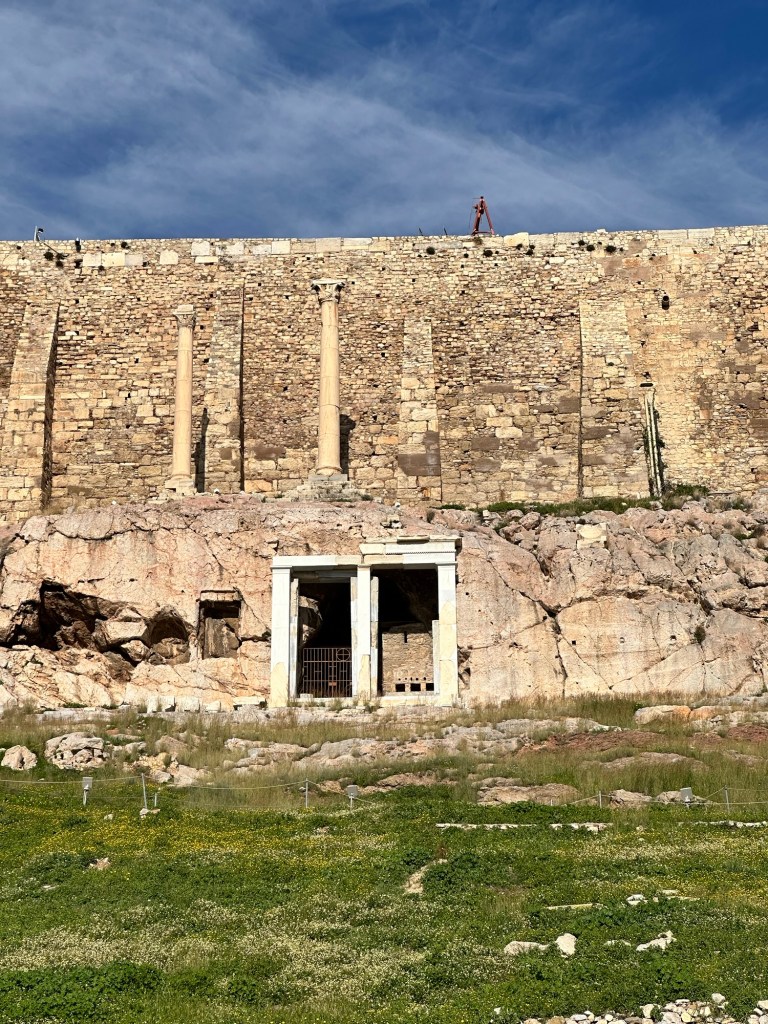
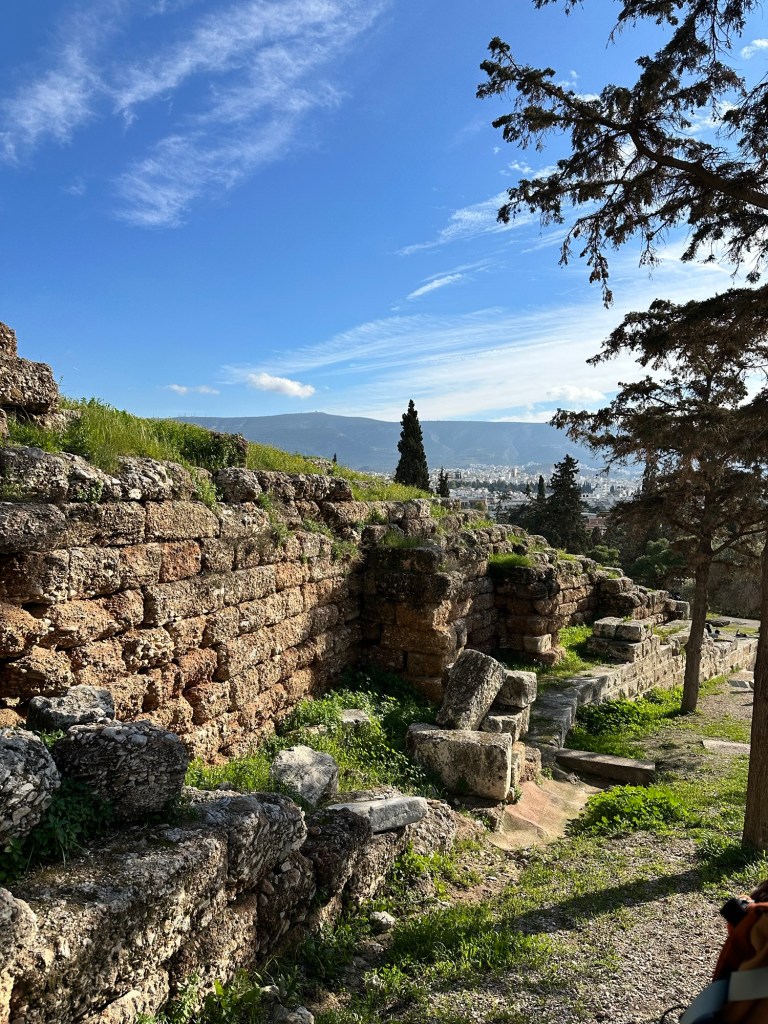
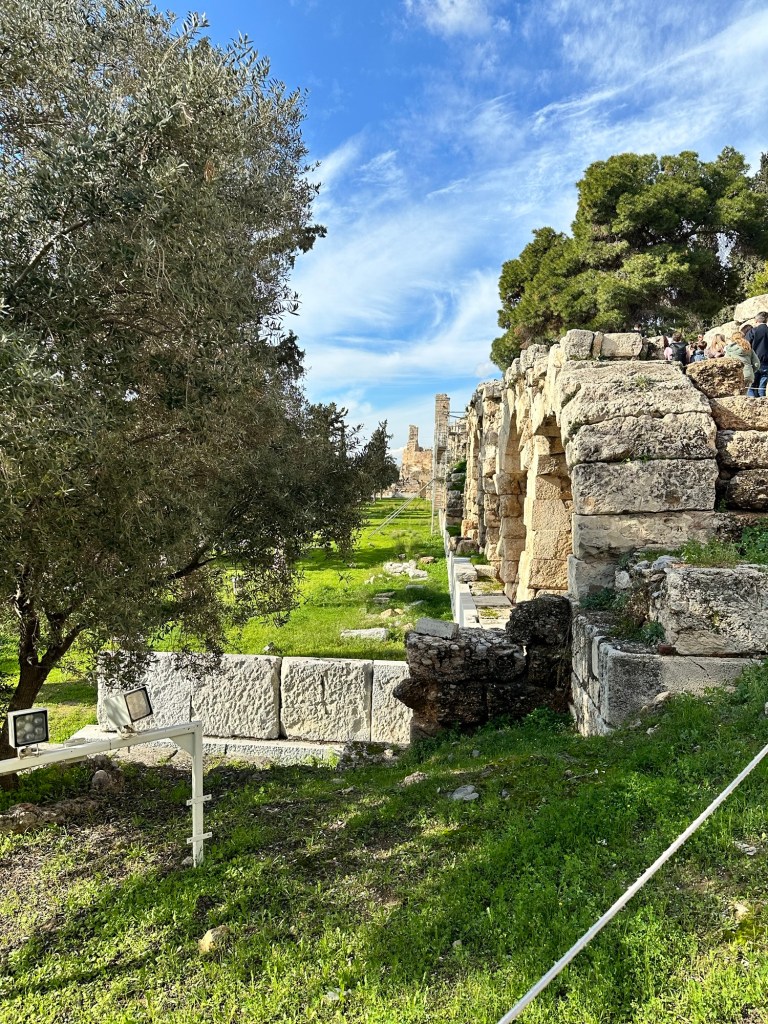
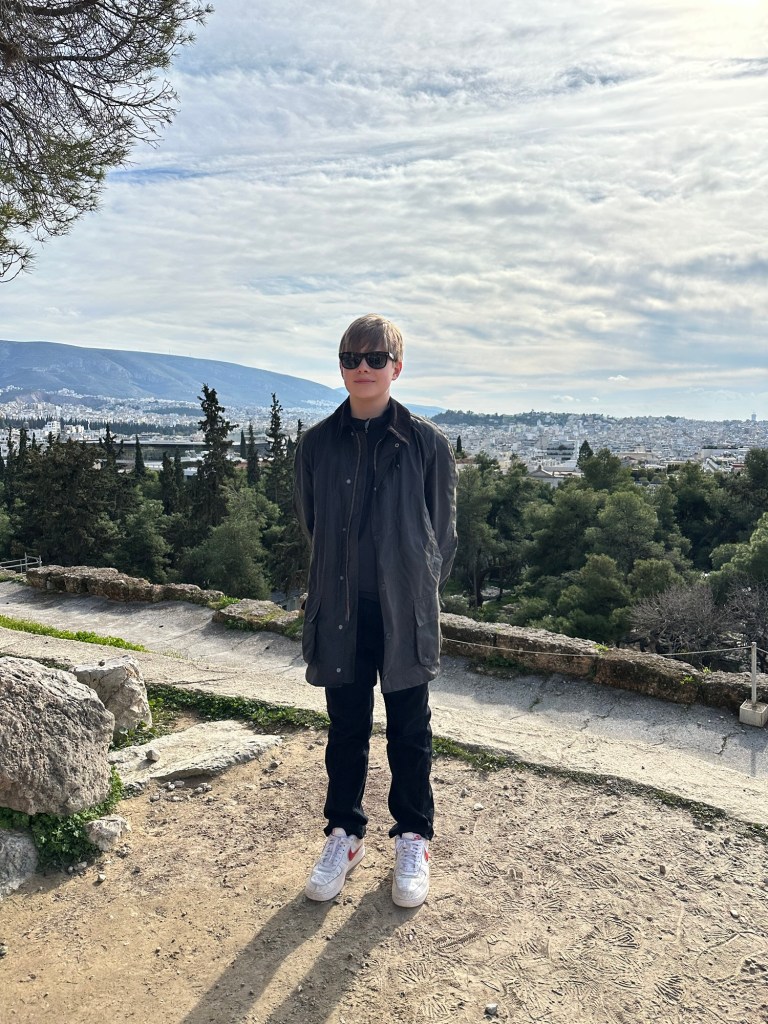
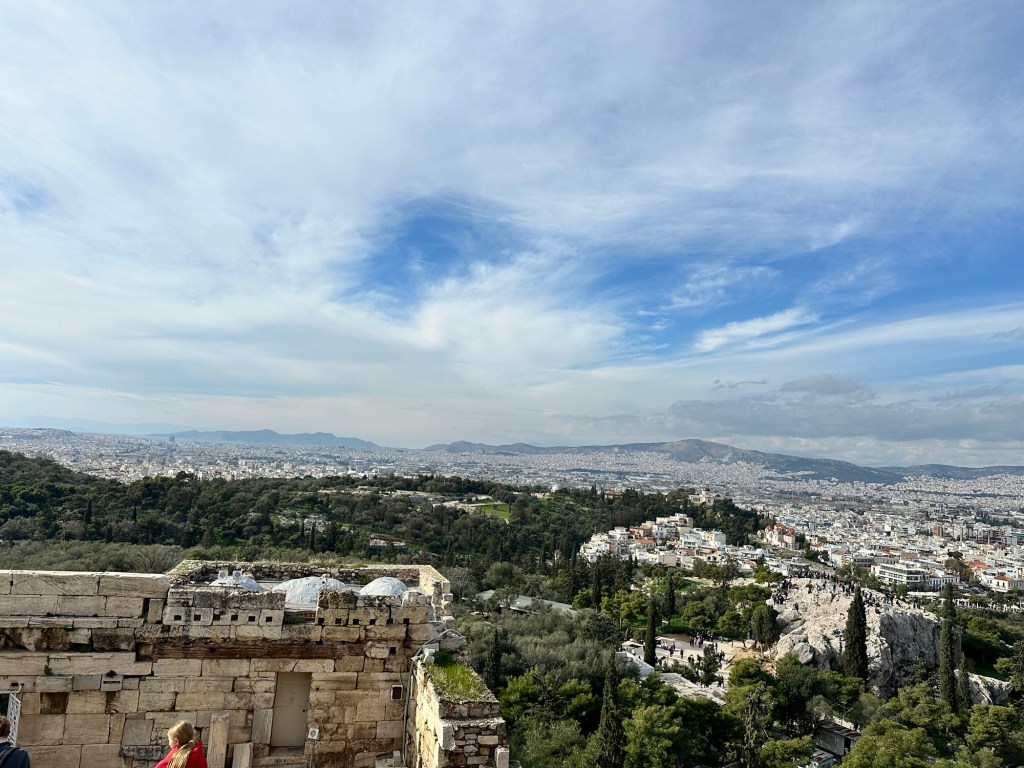
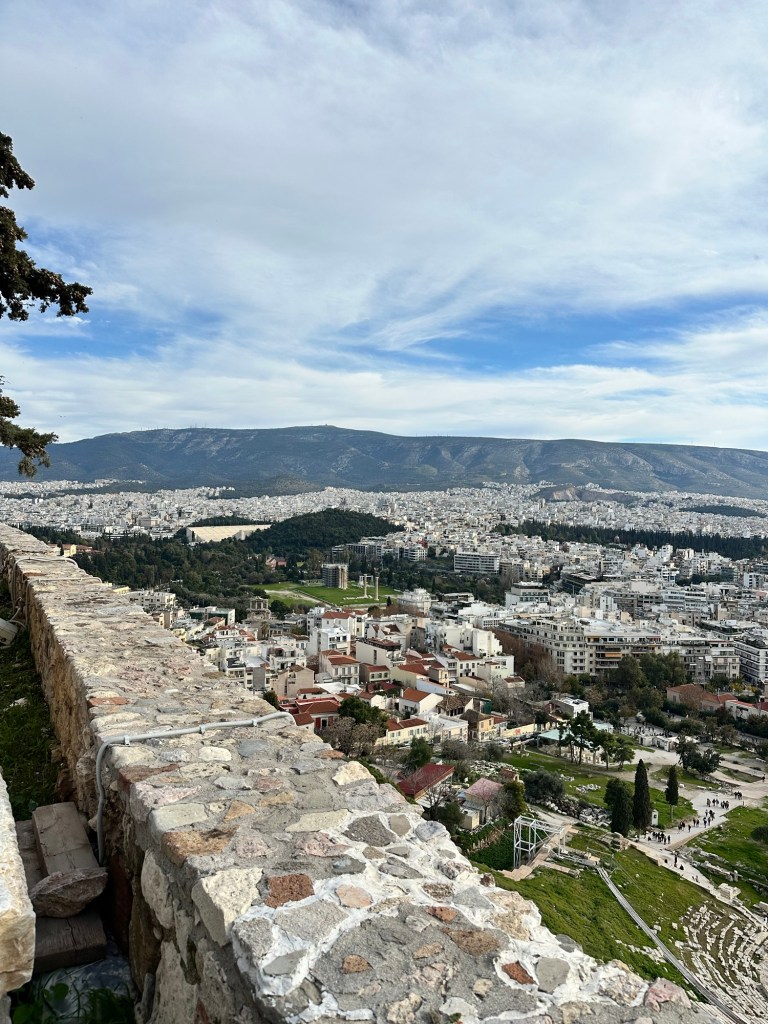
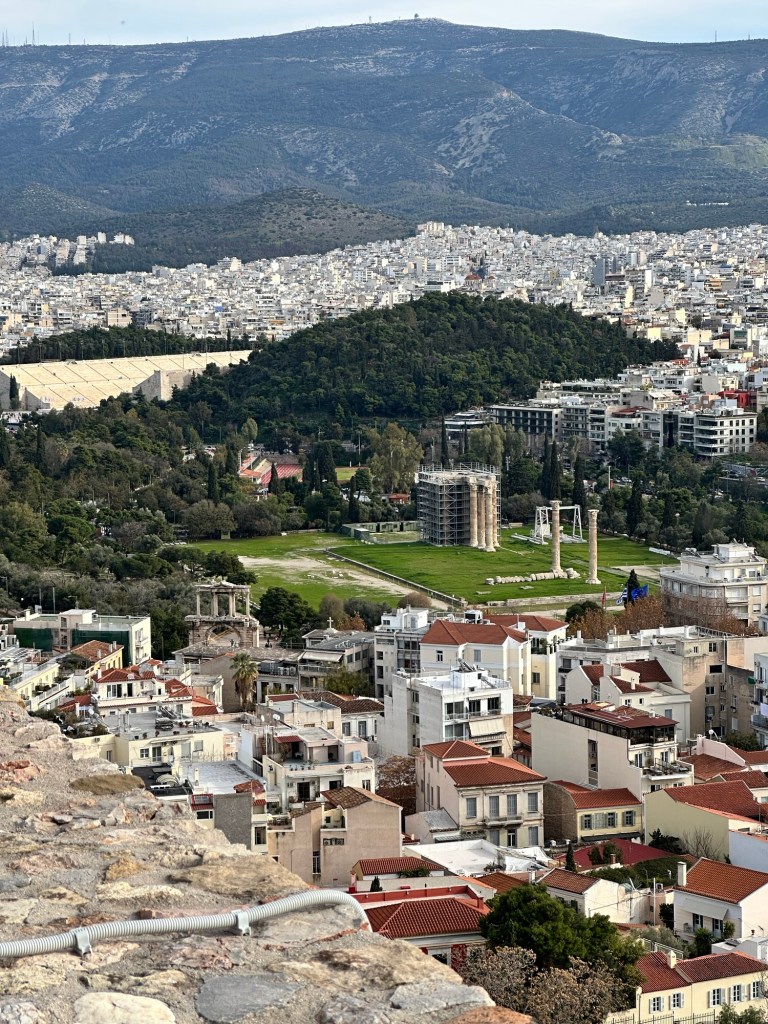
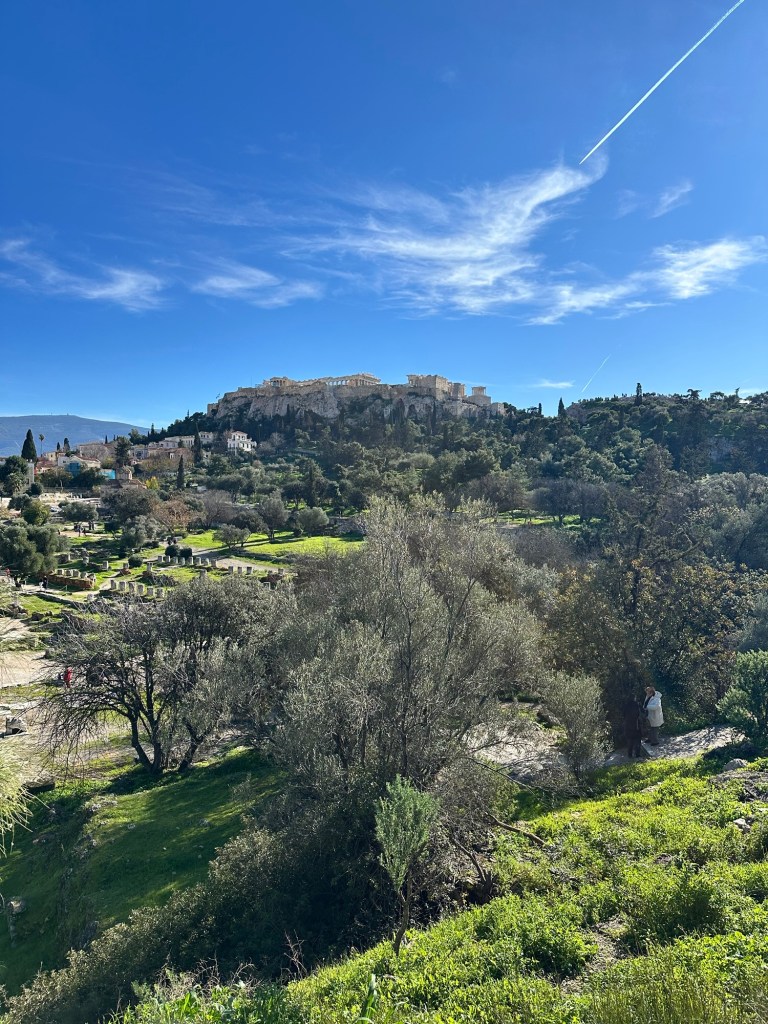
Continuing up the hill to the gate, you pass by other ruins such as the Sanctuary of Asclepius, Emenes Stoa (a covered walkway which must have been nice to have in the Athens summer heat) and the Sanctuary of Zeus Polieus, Aphrodite and Eros. From the overlook along the Acropolis path there is a great view of the Pynx which was the meeting place for ancient Athenian democracy. Our guide told us that originally when the leaders would meet, they looked at the Acropolis, but it was so beautiful it became a distraction, so the meeting seats were turned 180 degrees to the speaker spoke towards the Acropolis to ensure attendees would pay attention.
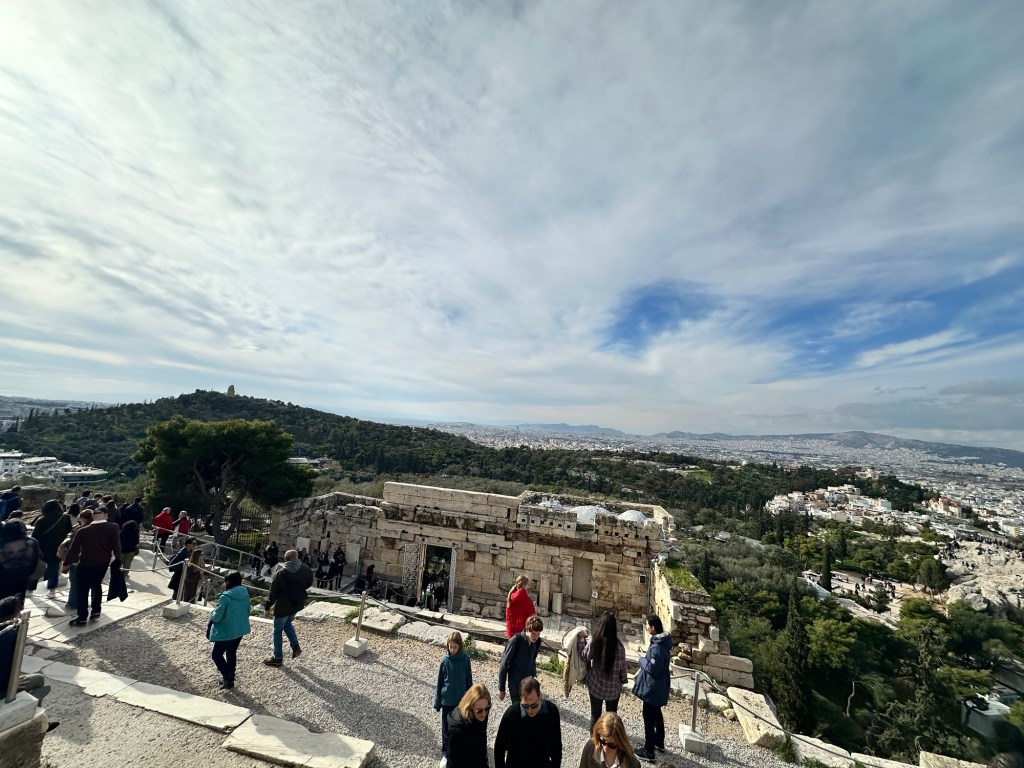
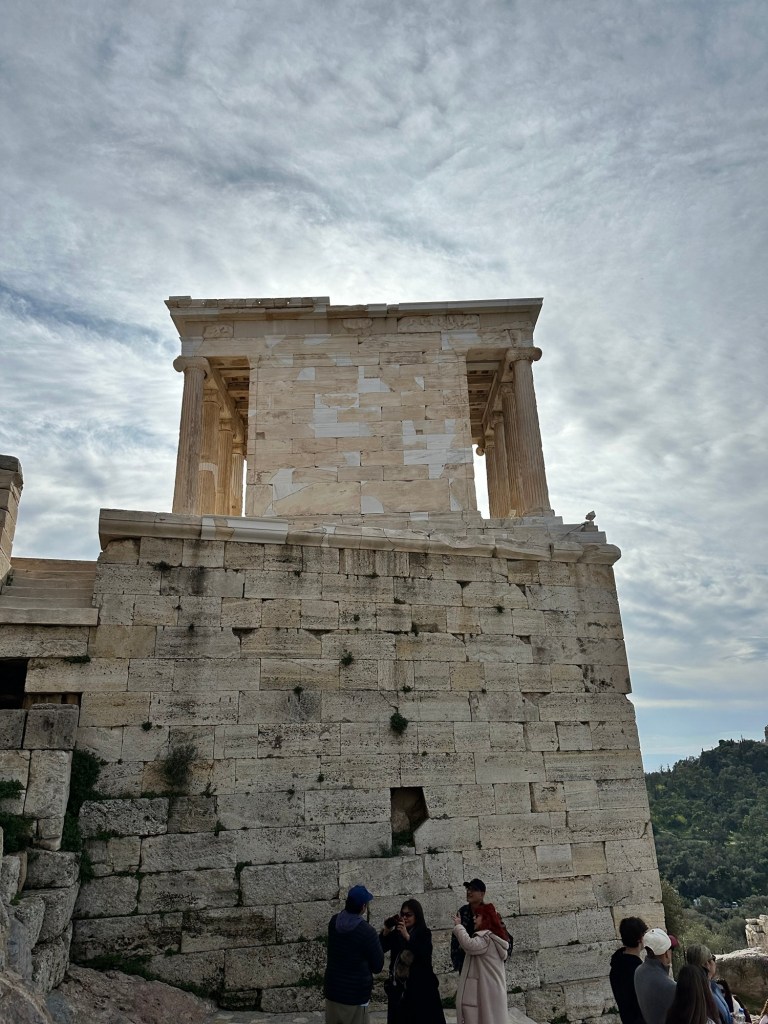
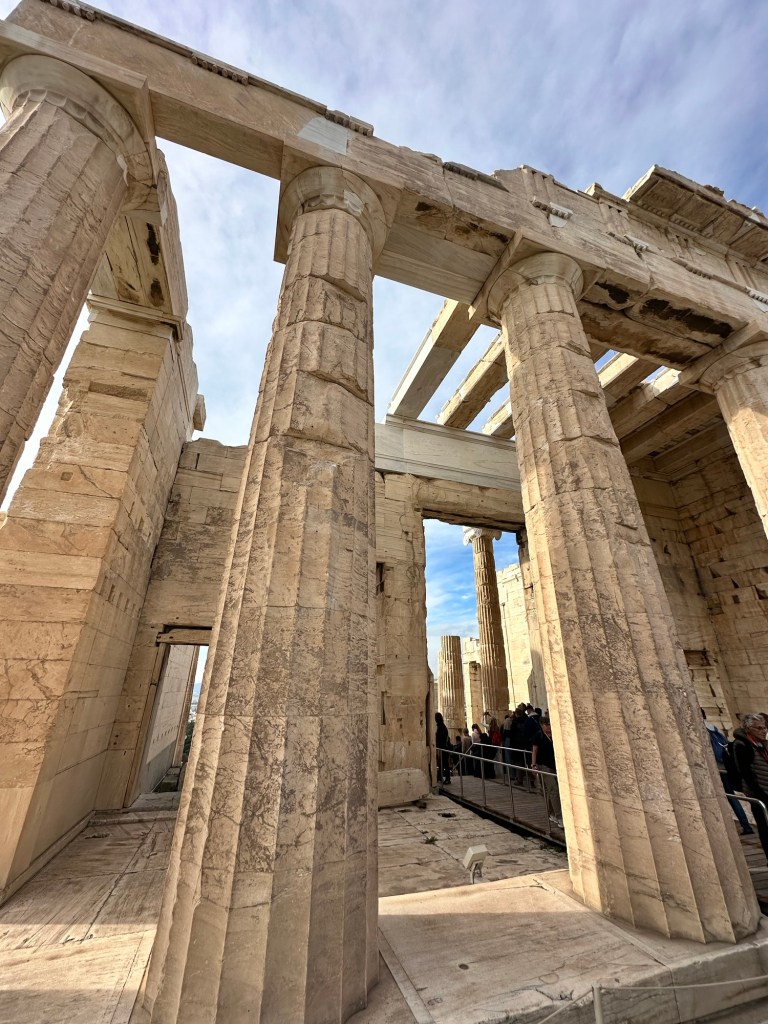
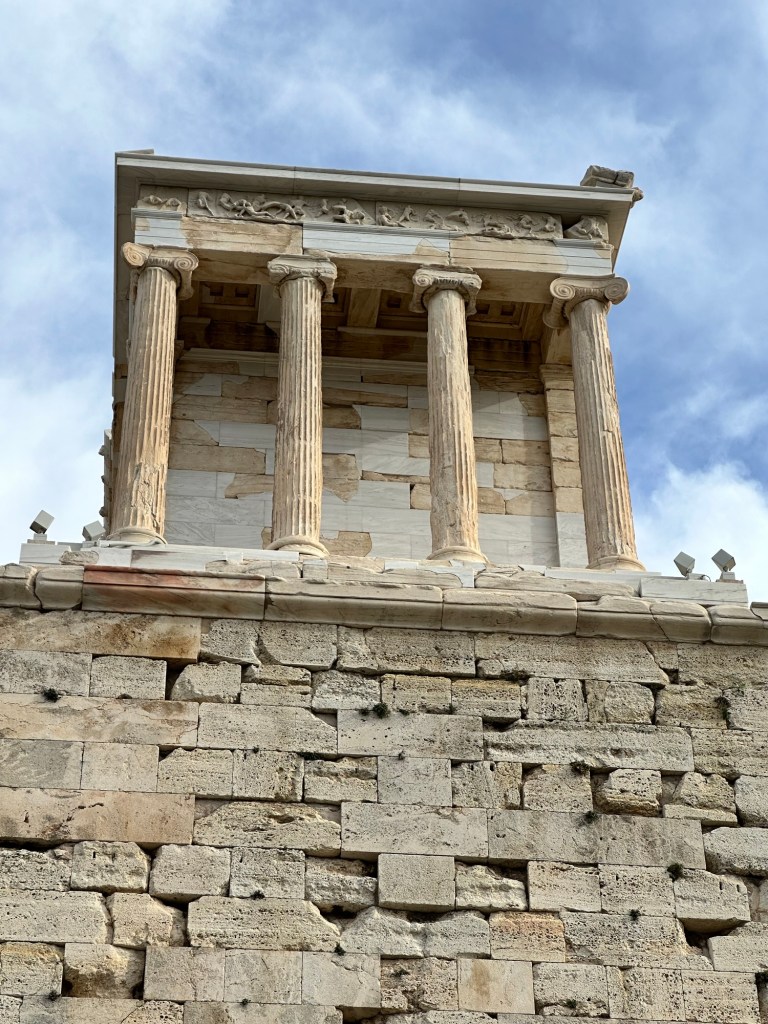
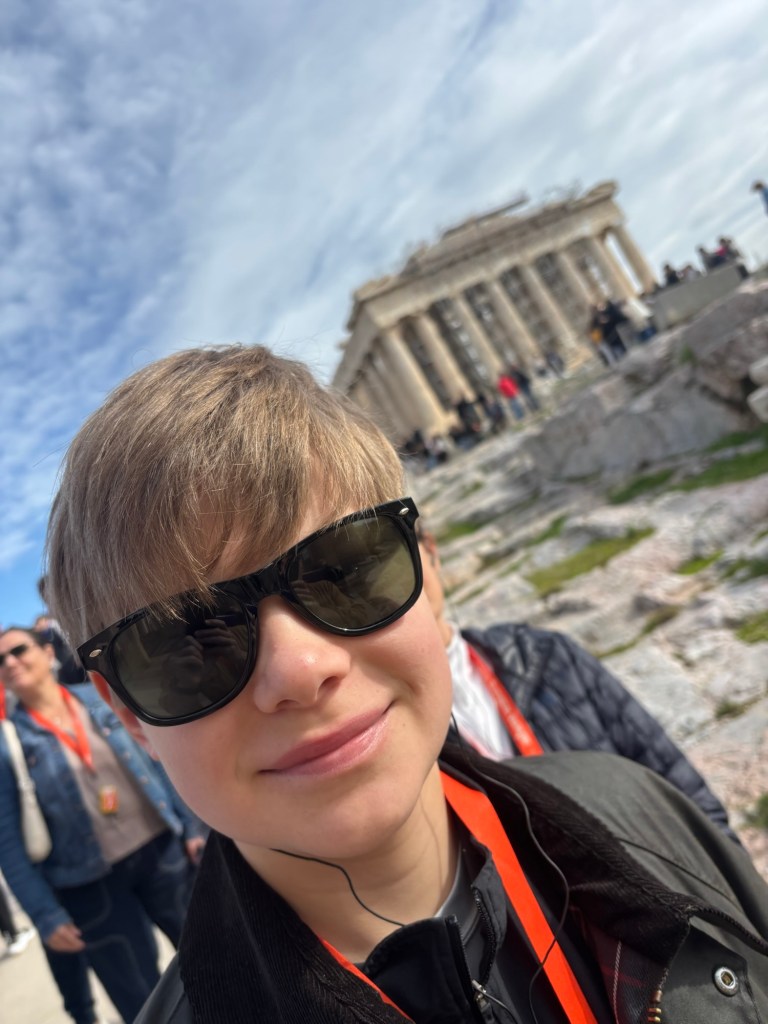
As we walked through the gate, we were glad we visited during the off season. The weather was cool, no rain, and the crowds were manageable, but still busy. Our guide explained the conditions during the peak summer tourist season, which did not sound pleasant. The gate and structures inside the wall of the Acropolis are unbelievable. How did they get those heavy stones up the hill? Truly a miracle. The Parthenon is the main attraction, but the other temples are just as beautiful and in better condition. All have had different lives depending on who was in power – Athenians, Romans, Venetians, Ottomans, Persians and probably others that I can’t remember and will certainly not do justice to historical accuracy. Fires, bombing, destruction and looting happened through the centuries. Probably the most egregious, at least to me, occurred in the 1800s when antiquities were stolen and taken to other countries and are on display currently. An interesting point about the ruins is that many times stones were taken and reused in new structures. We have seen this in many other cities as well. I guess a form of recycling, which makes sense.
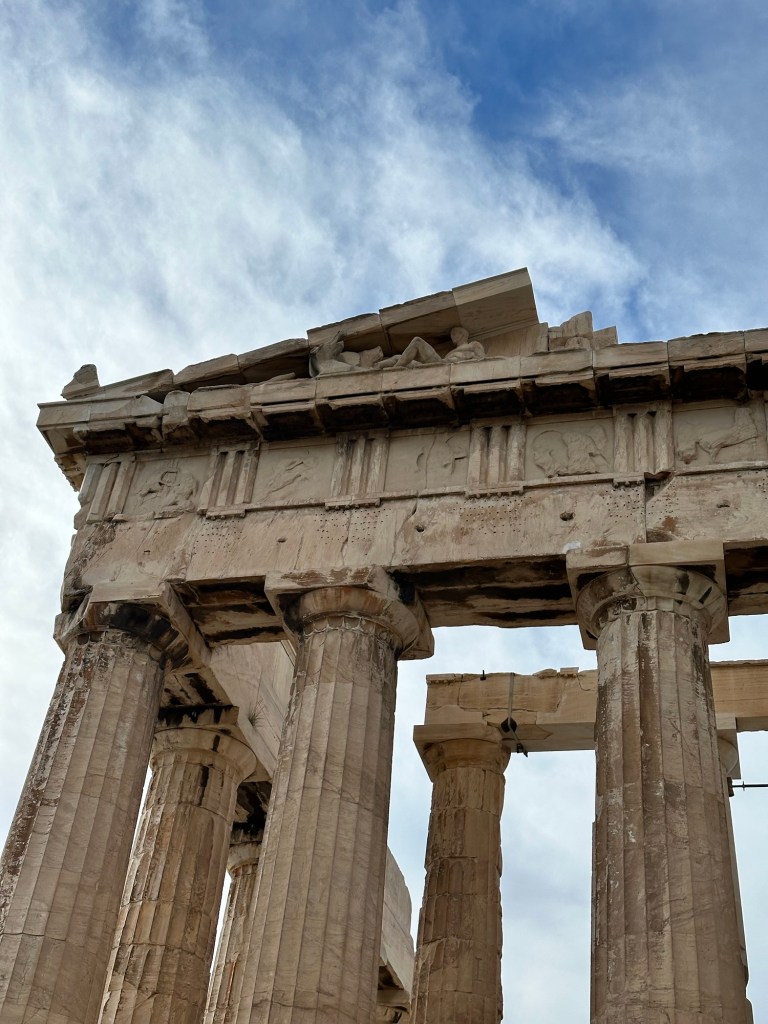
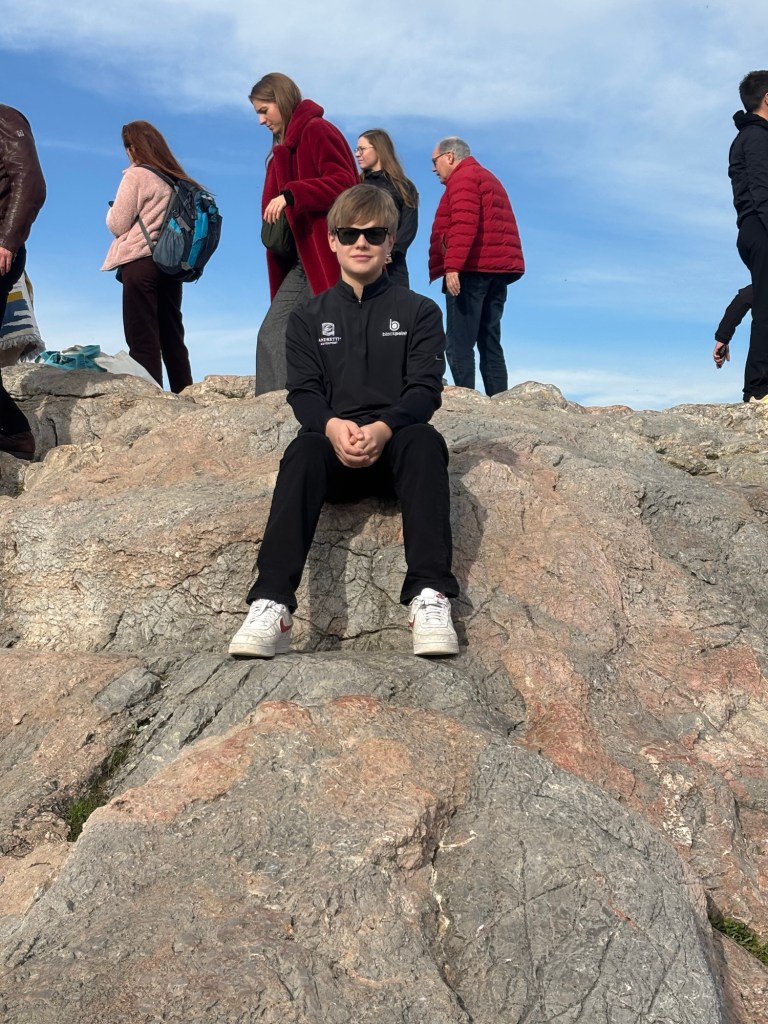
The views from the top of the acropolis are stunning and worth taking time to just sit on the stone ground that was once walked on thousands of years ago. As with all of the ruins we saw in Greece, the remains are collected in various areas, some inventoried, with the potential for being restored. The guards whistle, with a whistle, to anyone trying to touch or walk on the remnants. We were respectful visitors, but of course it would have been fun to explore behind the roped off areas. The star of the show, the Parthenon, is massive and beautiful, with stonework that overwhelms you. But it is also sad to know what it was once upon a time and to see the ruins now. Unfortunately, you can’t see the inside. The columns, frieze, metopes and triglyphs would have been an impressive sight to see during its heyday. There are renderings of what it once was, and various pieces have remained, so you get a glimpse into the extent of its beauty and awe. The Parthenon, originally a temple dedicated to the goddess Athena, the patron of Athens, was built to showcase the city’s power and wealth. Serving as a religious center, it held a massive statue of Athena. From the water it must have been very impressive! Through history it was turned into a church and a mosque depending on who had taken over Athens.
Upon leaving through the Propylaea gateway, we walked a short distance to Mars Hill. The hill served as a tribunal area during the mythological era. But more importantly was the site where Apostle Paul delivered his famous sermon to philosophers on the “unknown God” bridging ancient philosophy with Christianity, as noted in Acts 17. That sermon must have been very moving with the views from Mars Hill.
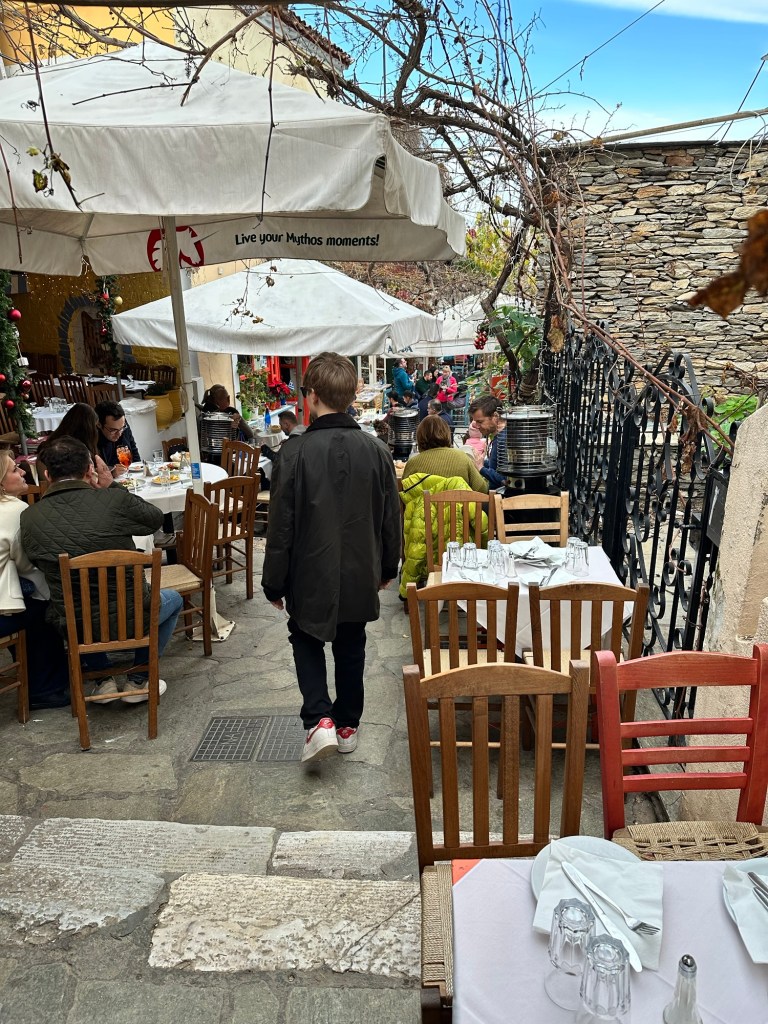
After leaving the Acropolis, we had an amazing traditional Greek late lunch at a local “taverna” our tour guide recommended. It was yummy and Connor really enjoyed trying new dishes. Before we left for Greece, Scott suggested we watch videos to learn about Greek food. That really helped Connor to know what was coming so when we read it on a menu, he wasn’t completely surprised. Big dad win with that idea! We ended the day walking through the streets of Athens in Plaka and Monastiraki. We were so impressed with Athens! We ended the night at our hotel’s Asian restaurant with sushi rolls and shrimp tempura, a new Connor favorite.
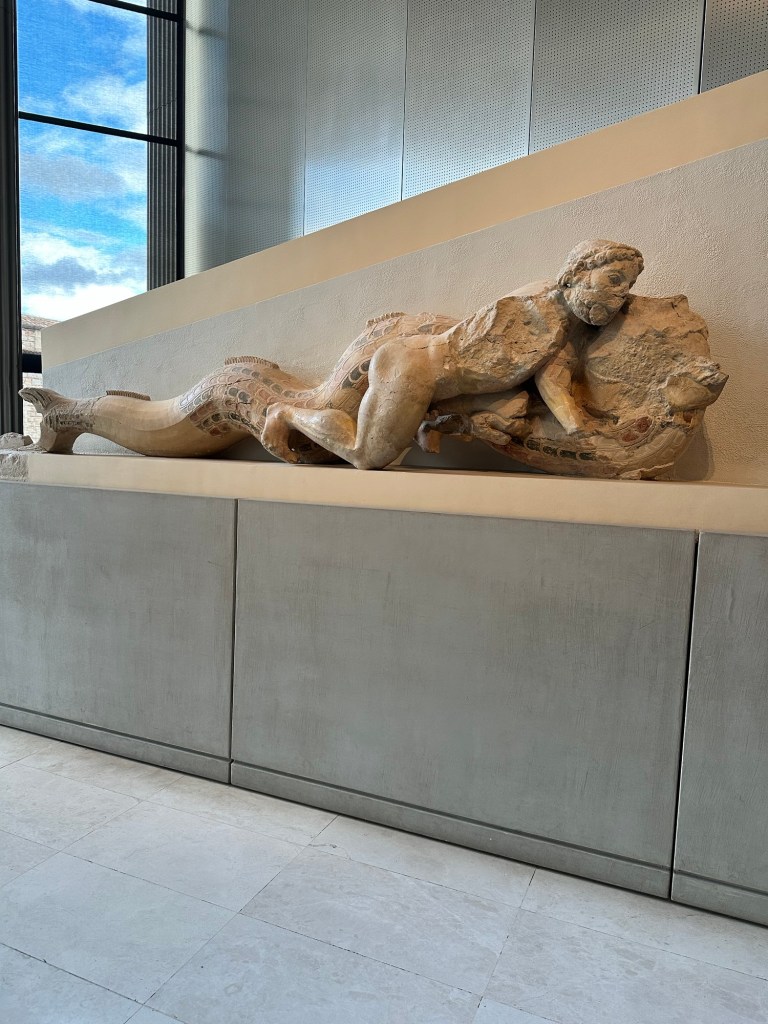
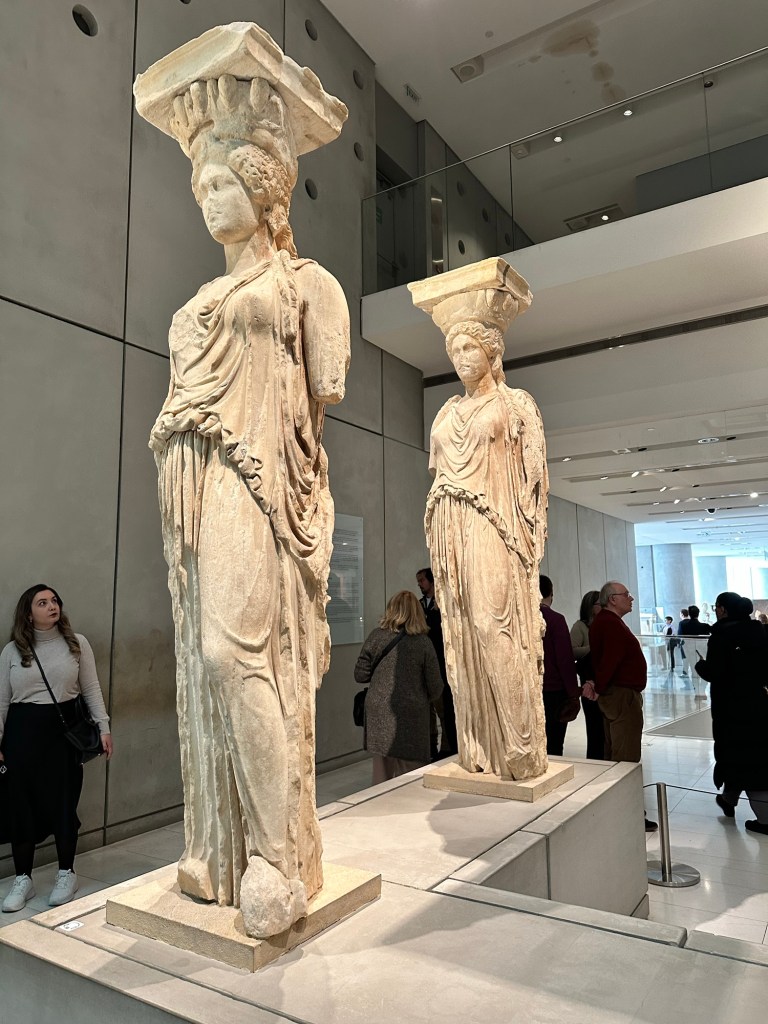
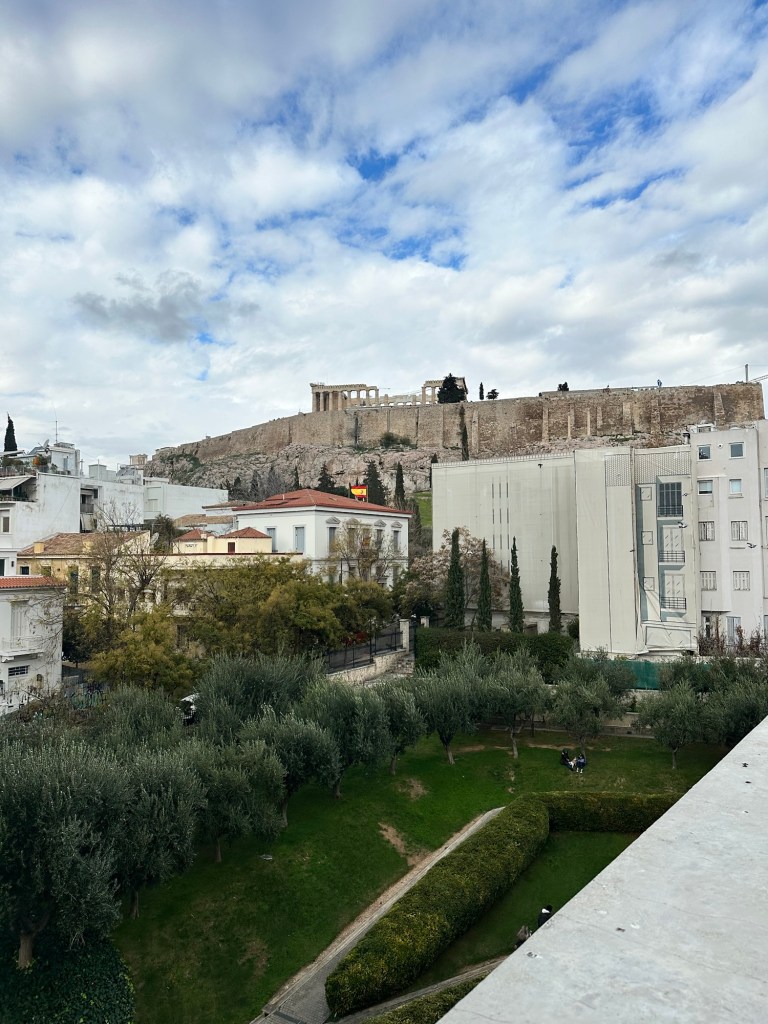
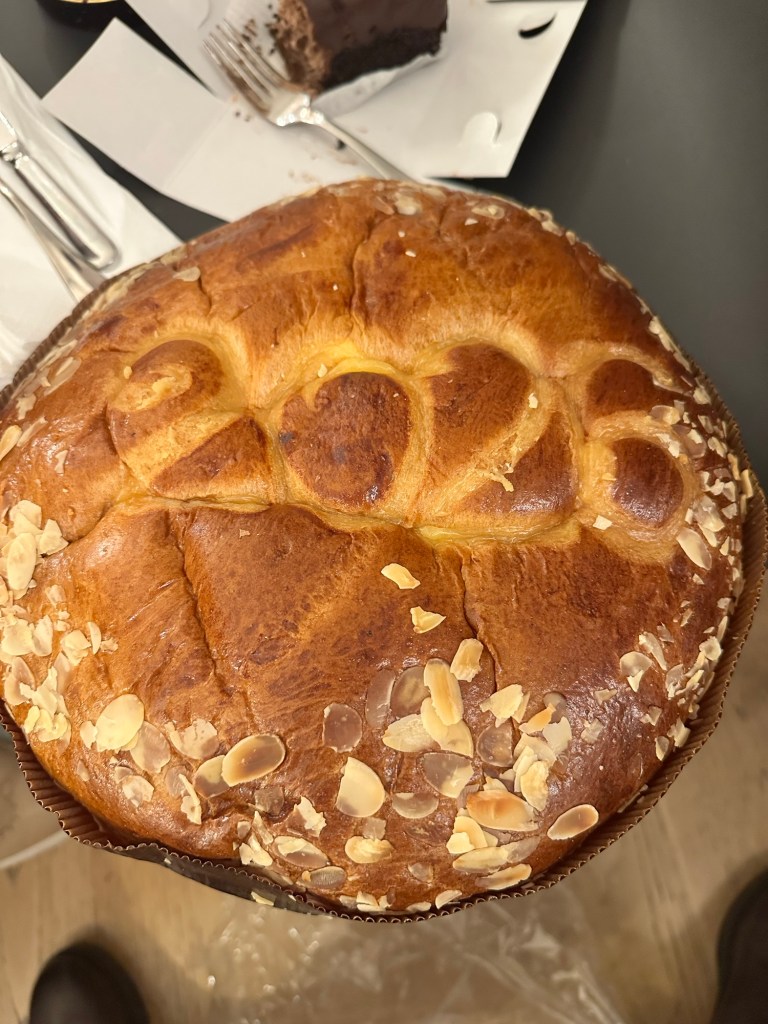
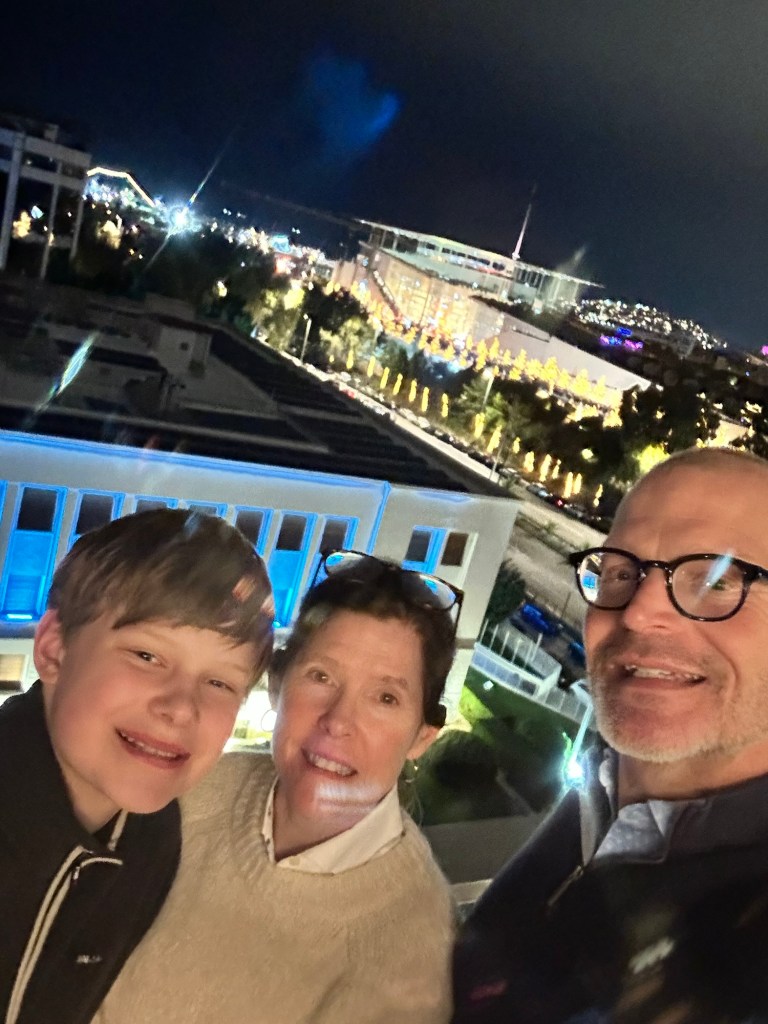
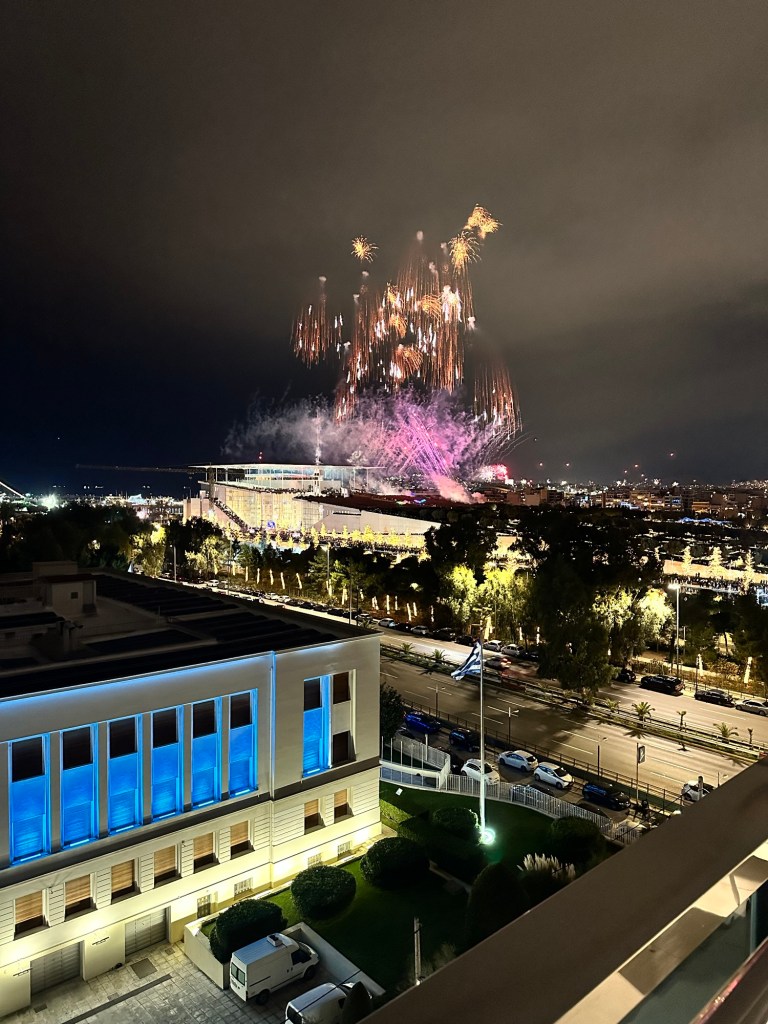
The next day was chillier, so we chose to visit the Acropolis Museum located at the foot of the Acropolis. What an awesome museum! The building is a modern structure with glass walls with views of the acropolis and the hill leading up. I am sure when it was built, it ruffled some feathers as it does not align in architecture to the history of Athens, but that contrast is what I liked. The modern building and indoor scape made for a beautiful canvas to showcase the history of the Acropolis and Athens. The number of artifacts is overwhelming and difficult to take every piece in. There are showcase shelves, massive statues as well as incredible pieces of the Parthenon displayed. The top level is the size of and same orientation as the Parthenon with steel columns in place of the actual column location with pieces of the frieze, metopes and triglyphs that you can walk through and under all while looking parallel outside the massive glass windows at the actual Parthenon. I loved it! The first level has glass floors so you can peer into the underground excavation level. Once we finished inside, we walked down to the excavated level, which is outside. We didn’t stay too long as someone, unnamed, was not dressed properly for outdoor this chilly day. The excavation area shows evidence of habitation from 3000 BC until it was abandoned in the 13th century AD with houses, bathhouses, public latrines, workshops, wells and cisterns. What an experience this museum was to visit! After the museum we ate at a fancier Greek restaurant that our tour guide recommended. I loved it, Scott and Connor powered through not as excited about it. The day ended with a late dinner at the hotel bar (burgers and pasta) and a late-night watching fireworks in our hotel room overlooking the gulf waters to ring in the new year. We tried out the traditional Greek cake vasilopita, also known as “Saint Basil’s Cake” or “Greek New Year’s Cake” which has a hidden coin, more like a morning lightly sweet pastry than dessert.
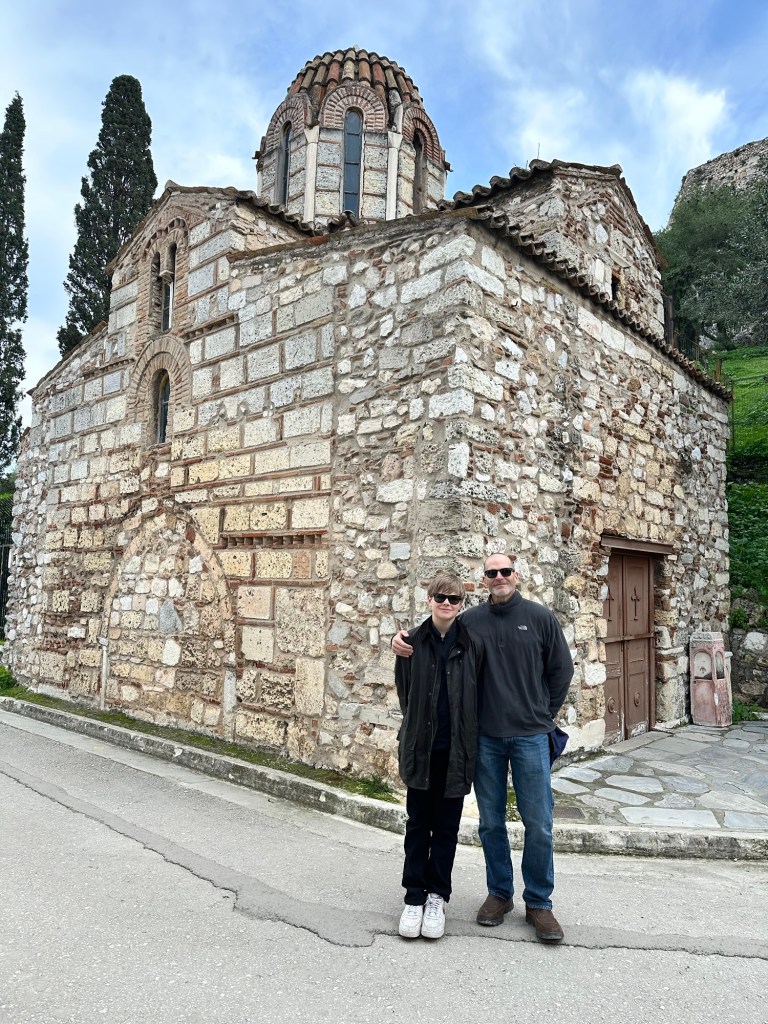
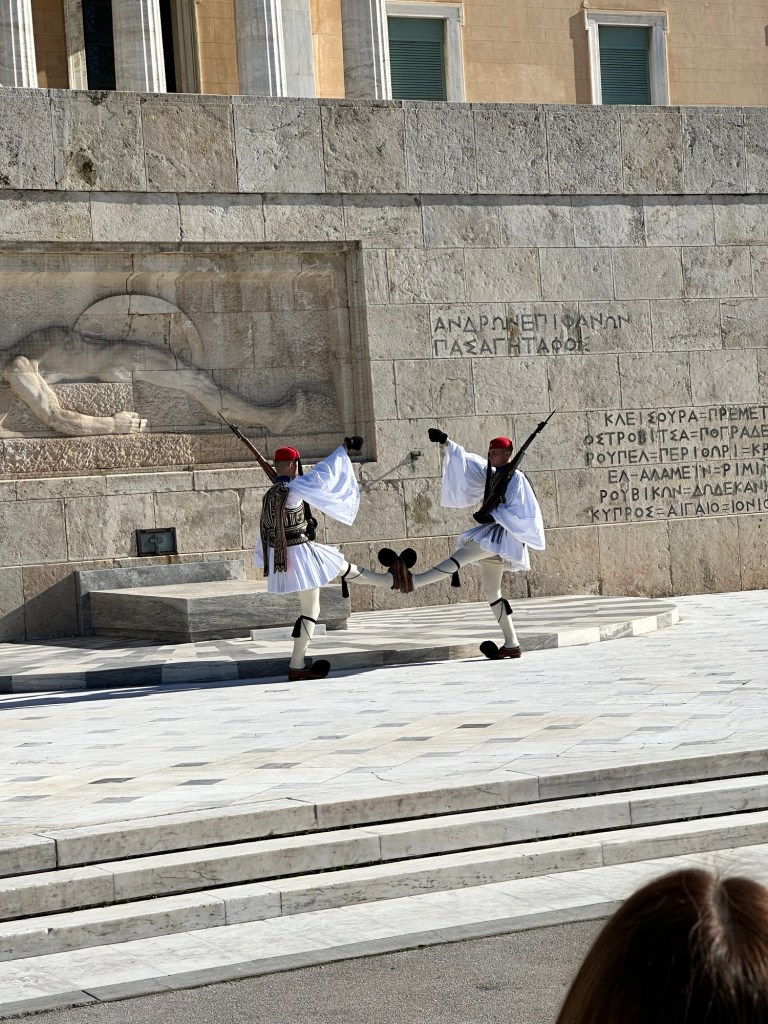
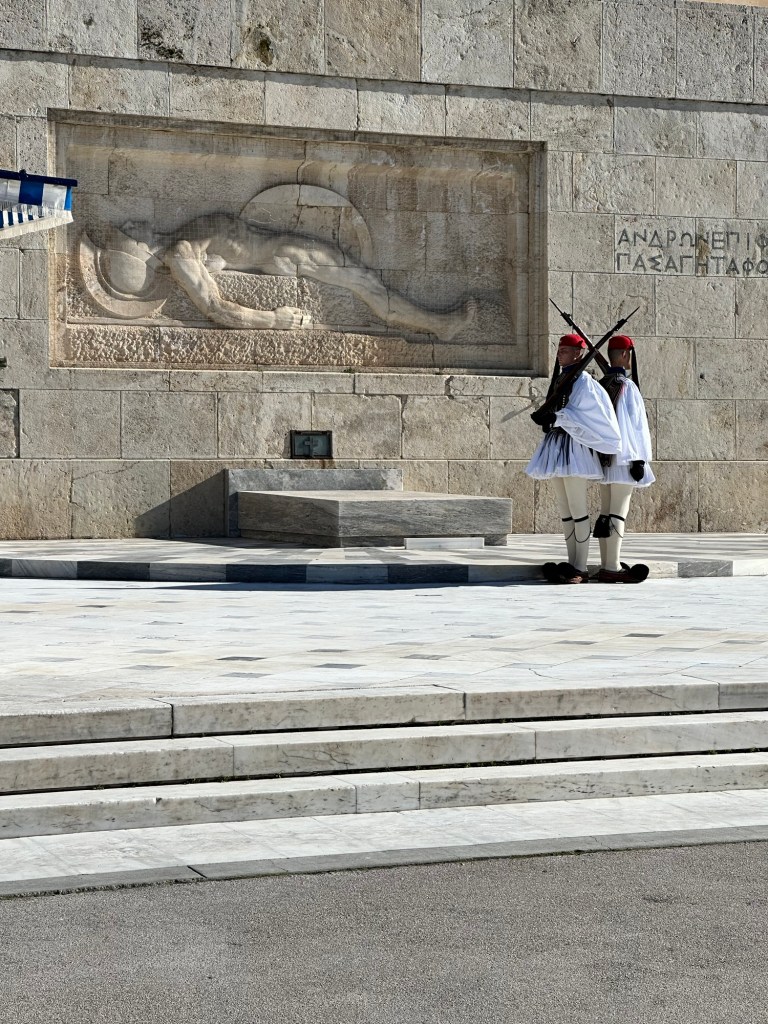
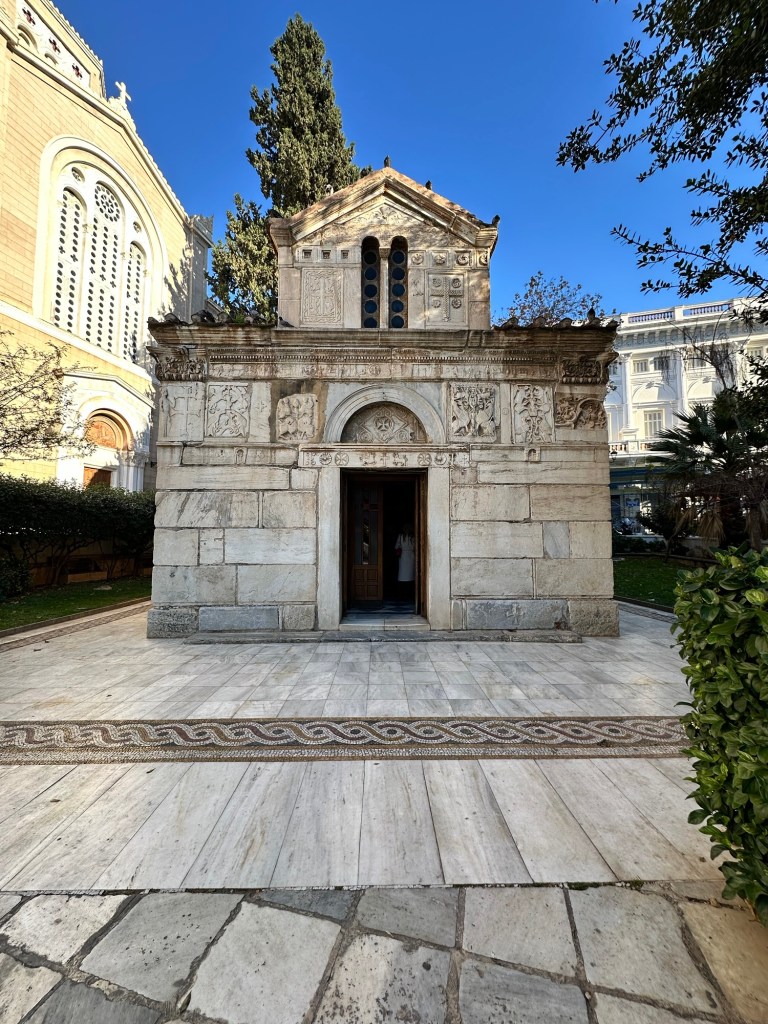
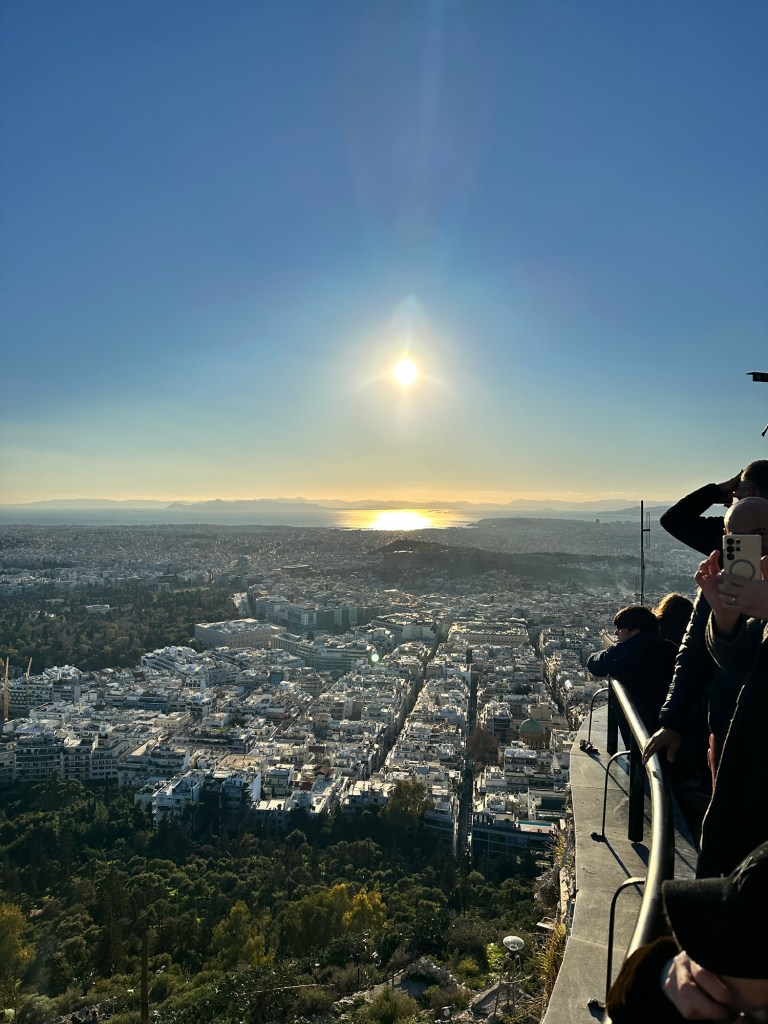
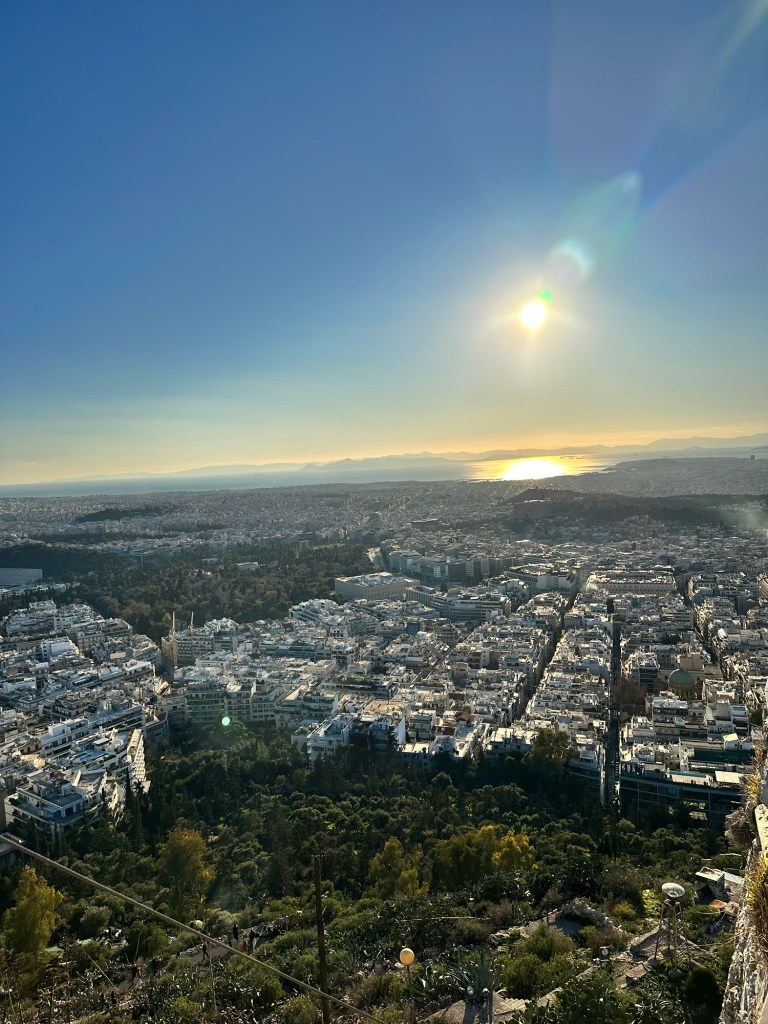
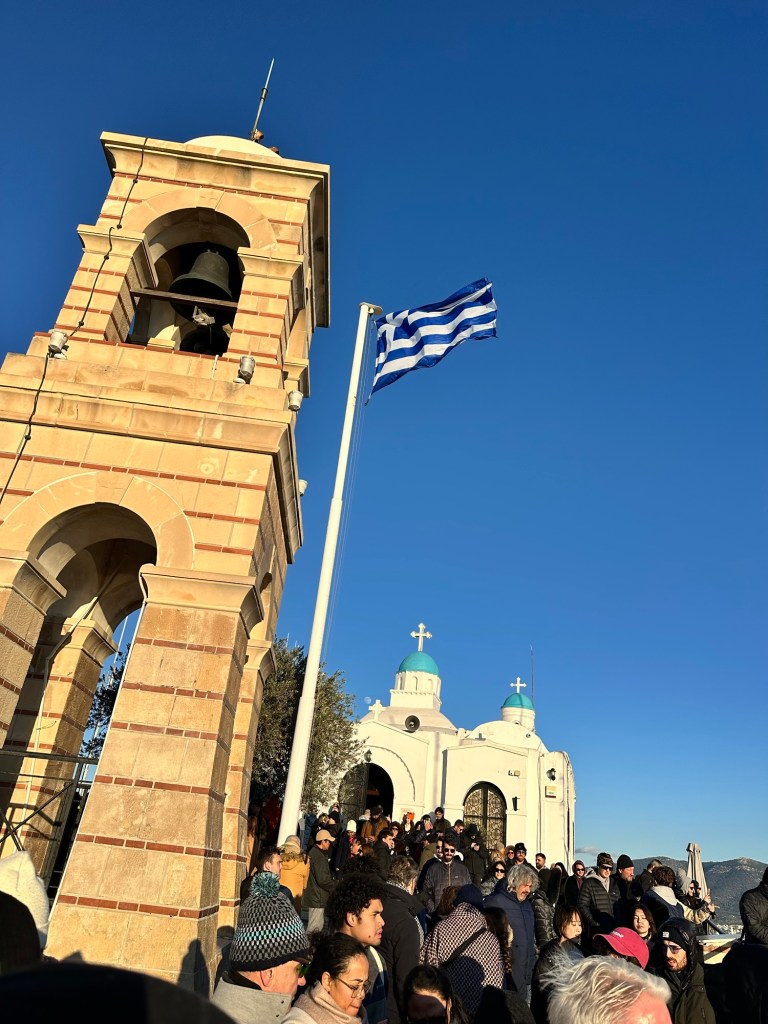
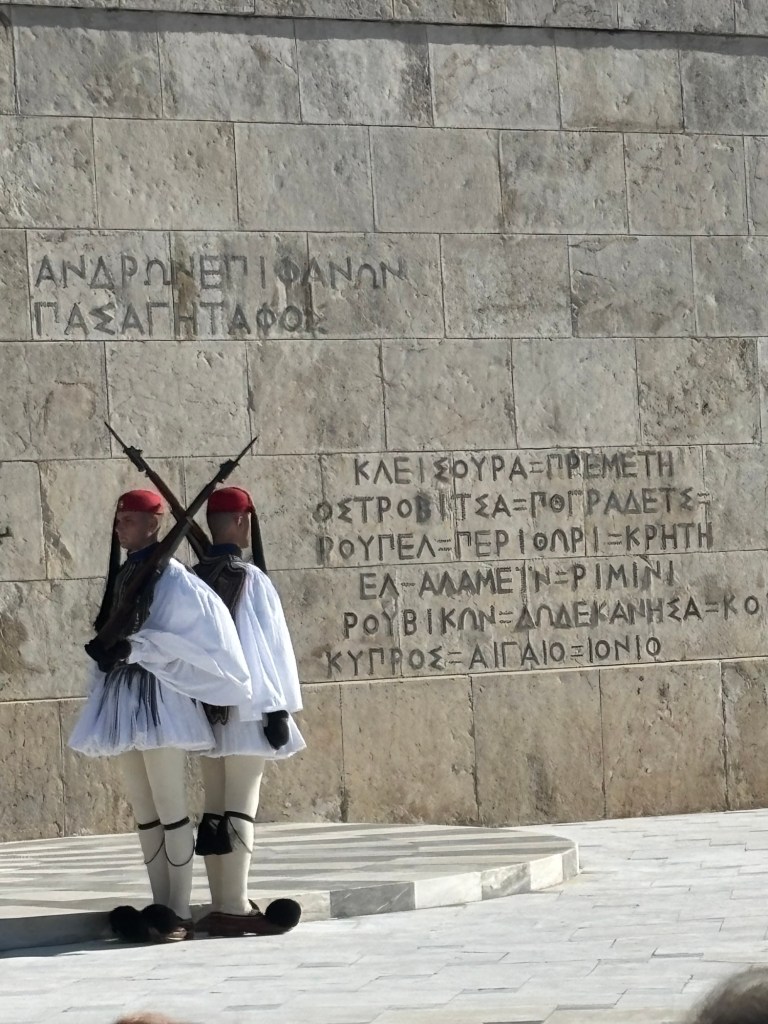
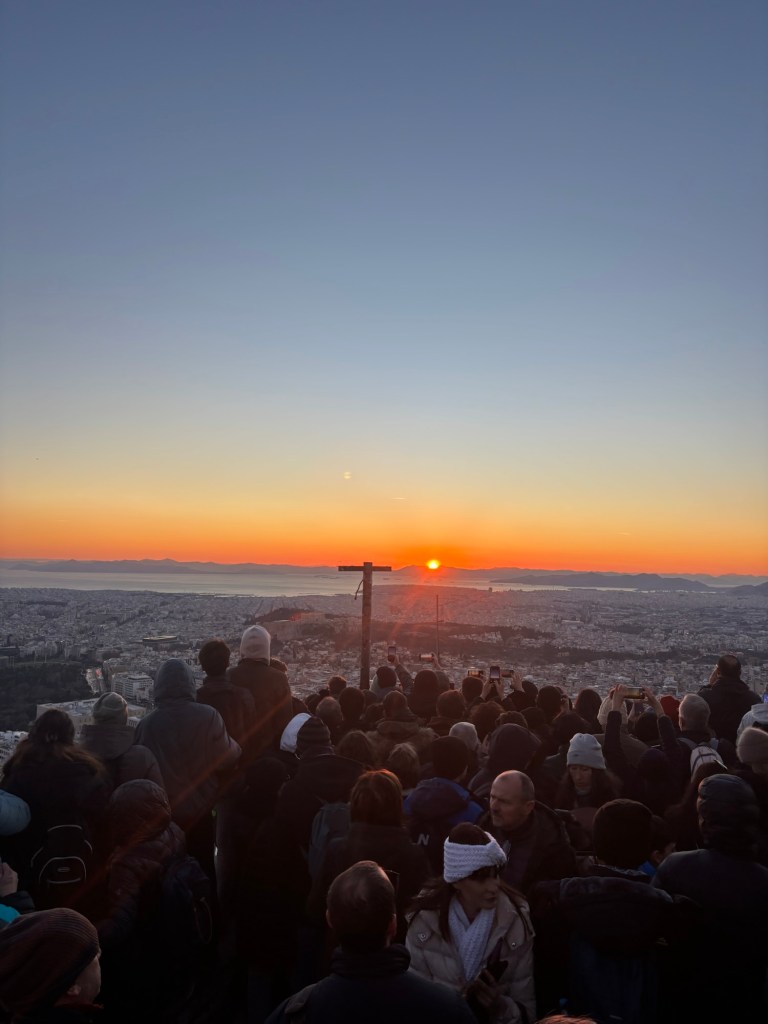
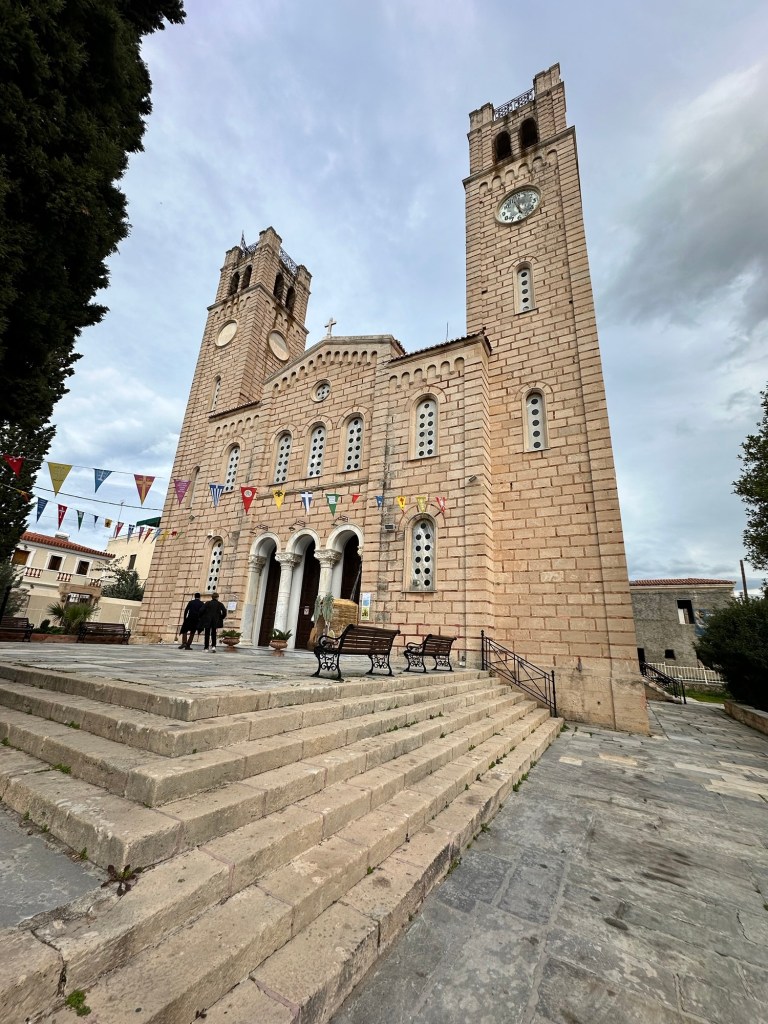
New Years Day we slept in and then went on walk about first stopping by the Greek Parliament building to watch the changing of the guard at the Tomb of the Unknown Soldier. This is where modern day life reflects to Greek history. First thing you notice is the uniform worn by the soldiers which includes a skirt with 400 pleats. Each pleat is a reminder of each year that Athens was under Ottoman rule. The ceremony honors fallen soldiers, with precise, slow-motion steps symbolizing national resilience. It was quite unique. From parliament we walked down one of the famous shopping streets, Ermou. Since it was New Year’s Day, the stores were closed but we still enjoyed the walk as there is always an interesting local vibe on the streets. We visited several ancient Greek orthodox churches, each with stones borrowed and repurposed from previous ruins. From downtown we decided to take an urban hike to Mount Lycabettus, which is a taller but not as large hill, than the Acropolis. We arrived at the cable car that takes you to the top, a short ride. The hill has a restaurant and bar; we stopped for a warm hot chocolate. We then ventured to the top with a small monastery and a 360-degree view of Athens. Wow, what a vantage point as we watched the sunset on the first day of 2026!
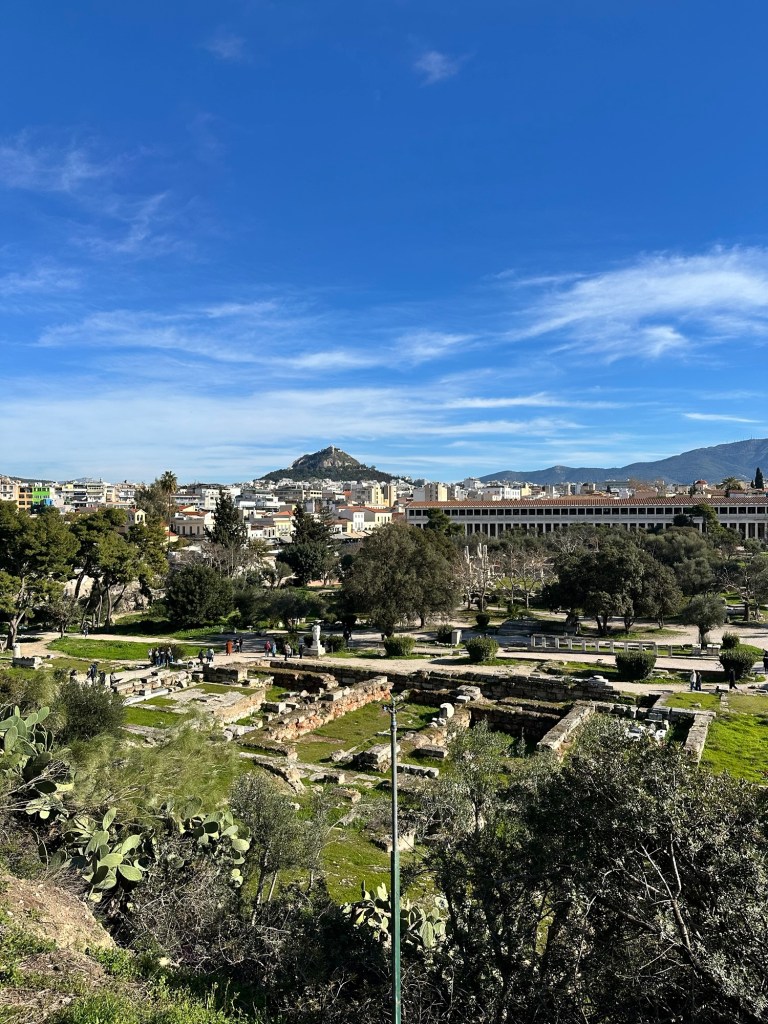
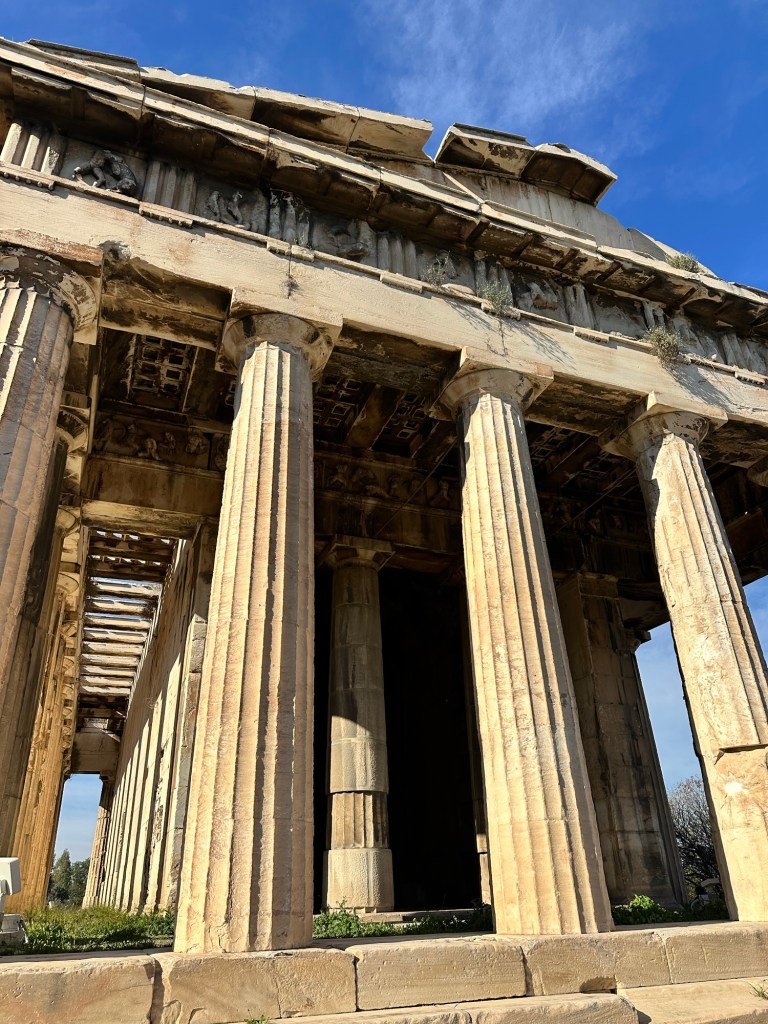
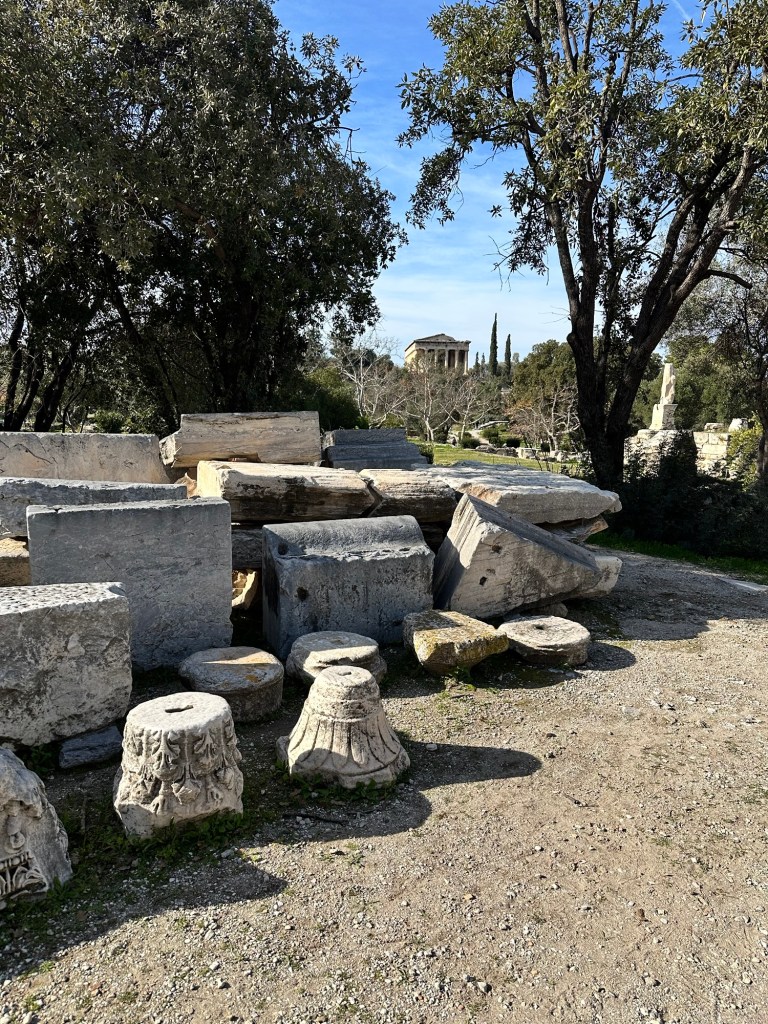
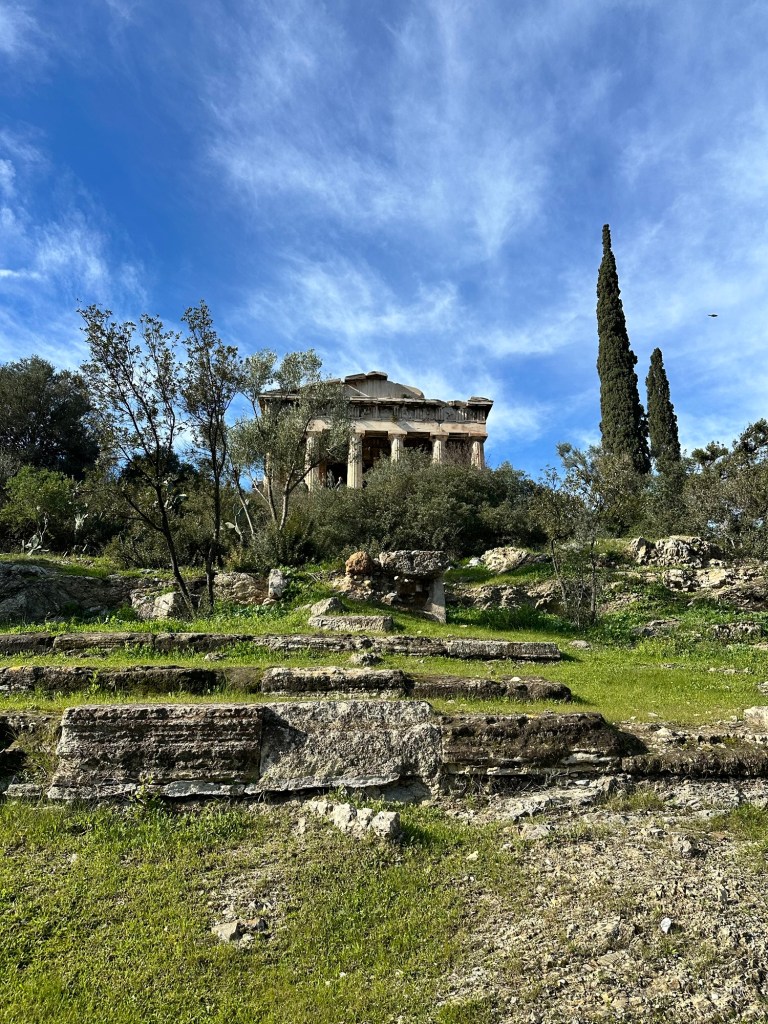
The Ancient Agora was next on our visit in Athens which was the center of government, shopping, social gathering and religious activity. The Temple of Hephaestus is dated from the 5th century BC and the most well preserved temple since in the 7th century AD it was used as a Christian church. The marketplace, or stoa, was a 2-story building of shops. The building has been rebuilt with the first floor used as an artifacts museum and the 2nd floor now a school. The Stoa was reconstructed in the 1950s by the American School of Classical Studies at Athens, interesting! As with the Acropolis, there are ancient remnants all over the ground. I was surprised that as close as Athens is to the water, there doesn’t seem to be an issue with salt air damage. The sun, however, is a different case. Many of the renderings show the colors that may have been used on the outside of structures and monuments, they were quite vivid. After the Ancient Agora we walked different streets of the surrounding neighborhood and found a local taverna with traditional gyros, Connor’s first one to try, we all enjoyed our selections. We made our way back to the Parliament area and Syntagma Square to enjoy the Christmas lights and took a quick walk through the National Garden. In winter the garden is pretty and lush, but I bet much more beautiful in the spring and summer with the canopy, and certainly a needed break from the sun and heat then.
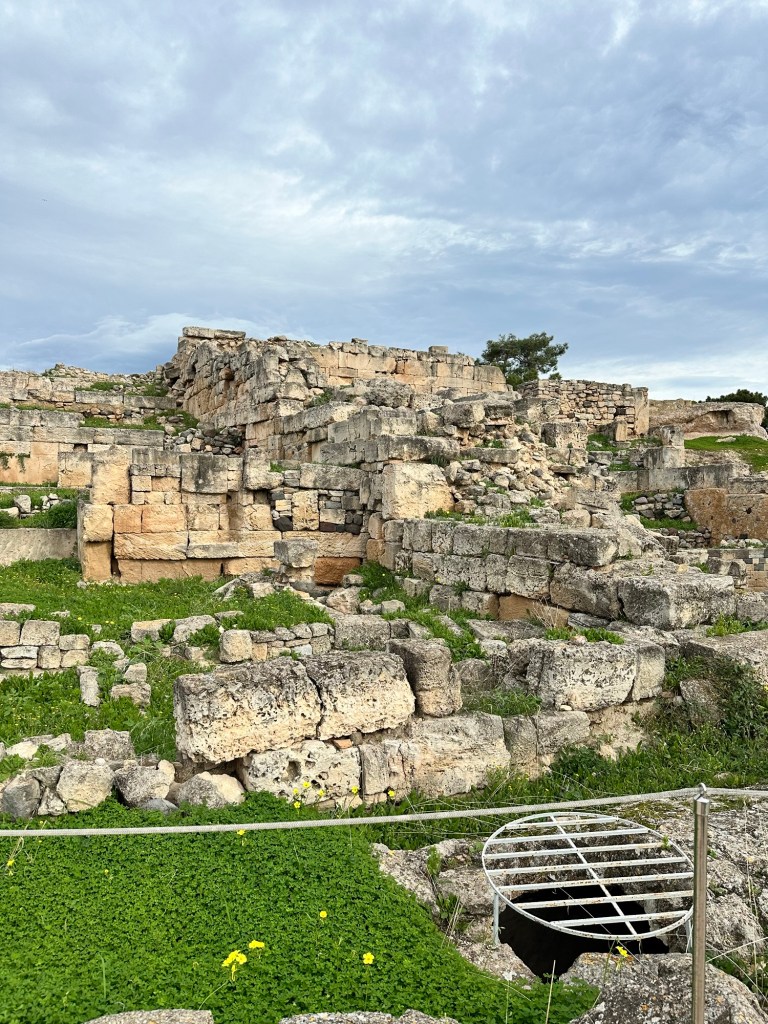
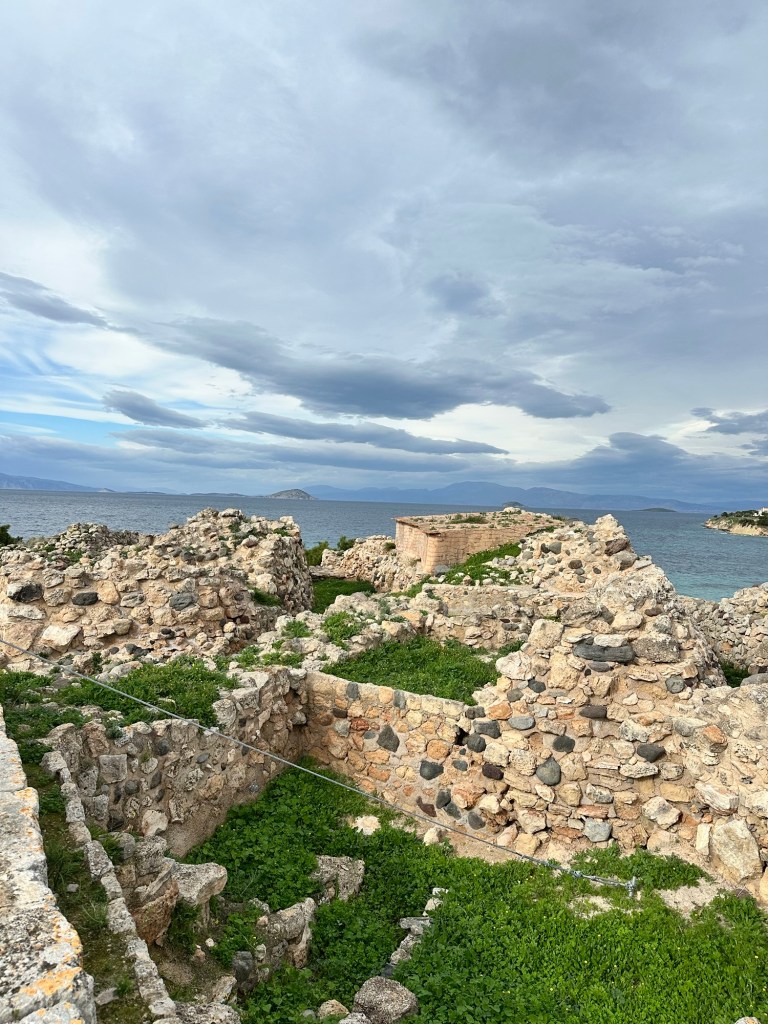
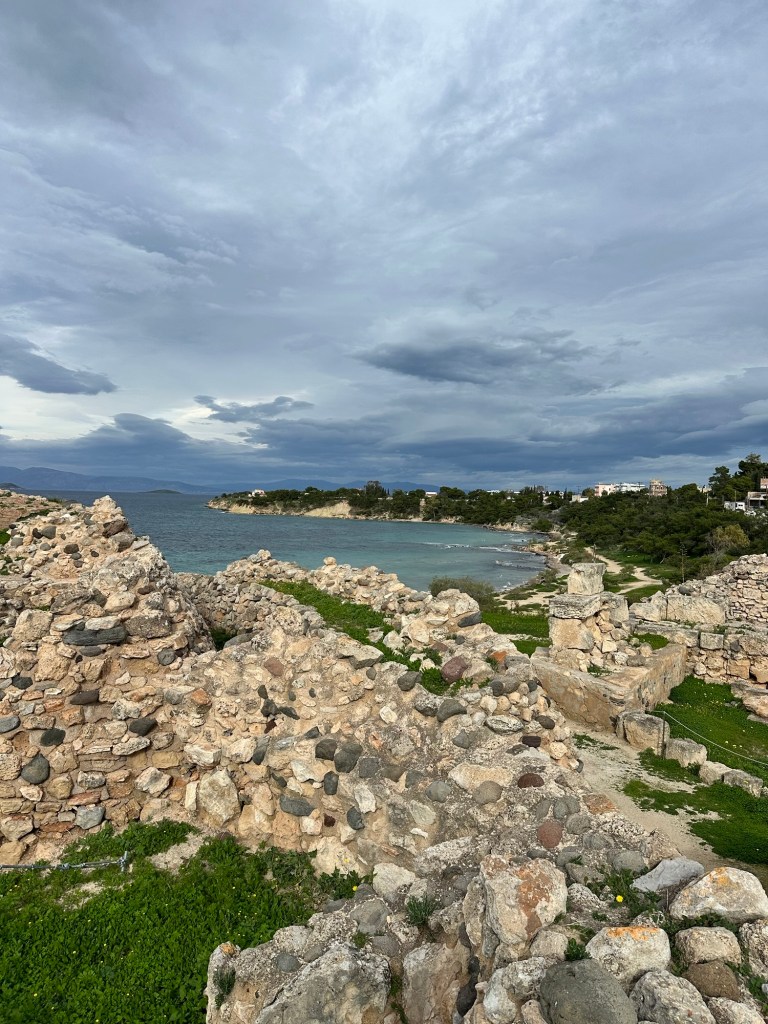
For our last day in Greece, we decided to hop a ferry to a Greek Island. There are tons of islands in Greece and famous ones such as Santorini. Our criteria was simple, an island close with an hour-ish ride, open given the holiday weekend and walkable with ruins to see. We “landed” on Aegina Island, after a somewhat bumpy ride as it was windy that day. Our island selection did not disappoint. Aegina’s archaeological sites date back to around 3000 BC and have continuously been inhabited for thousands of years.
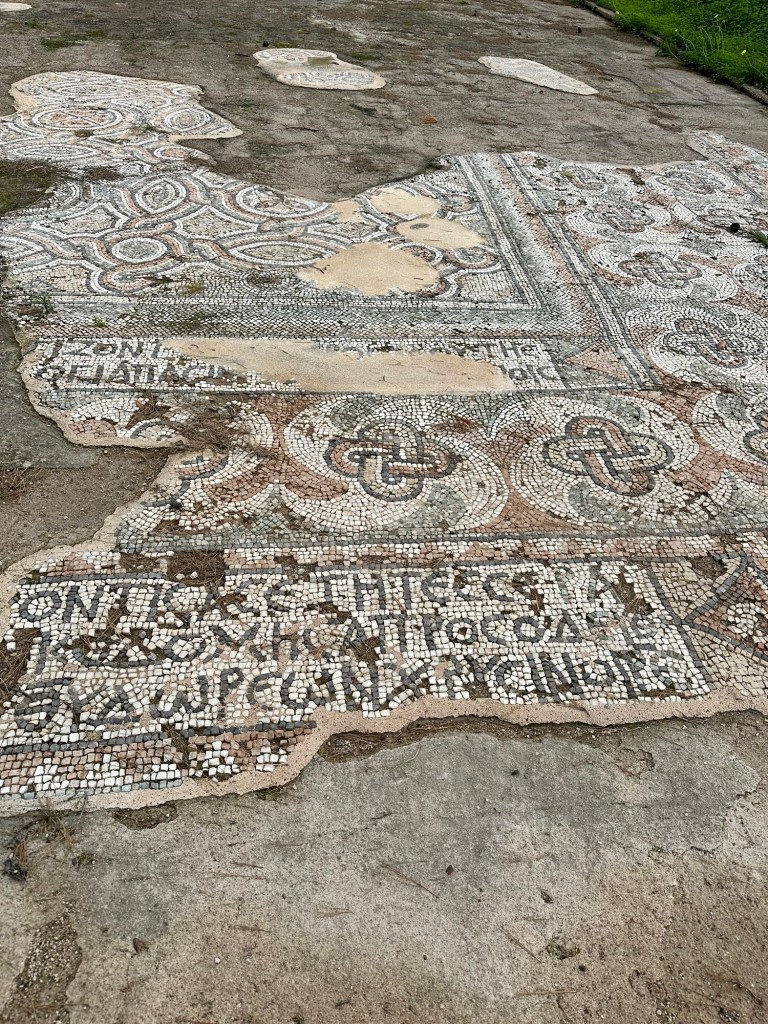
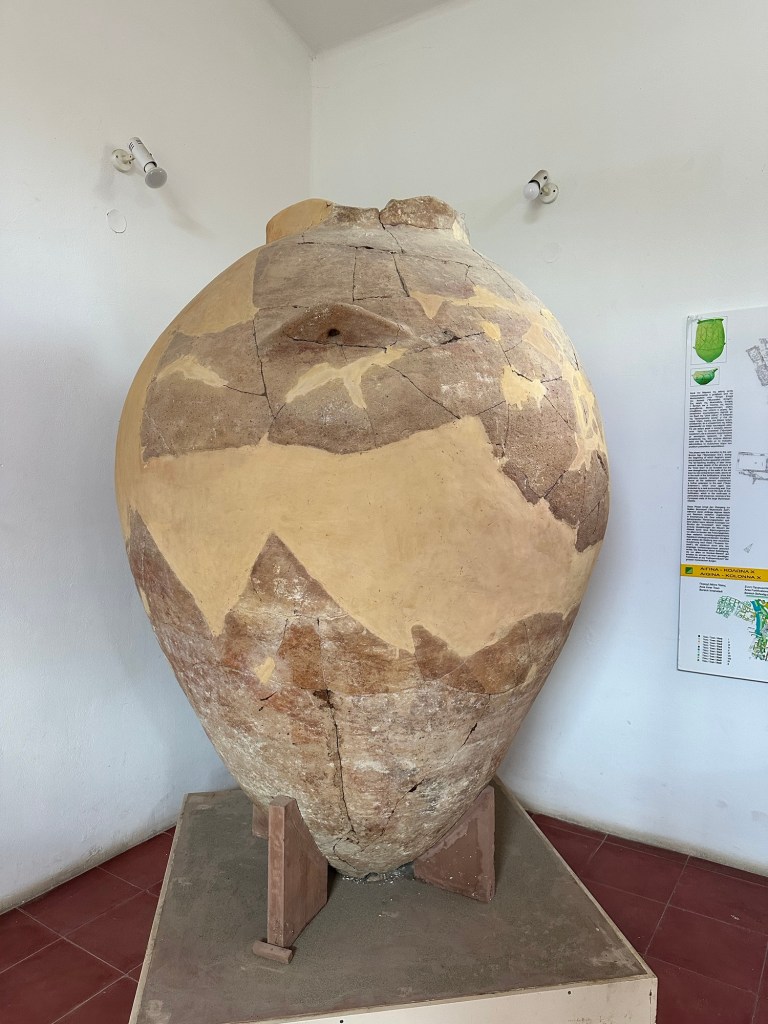
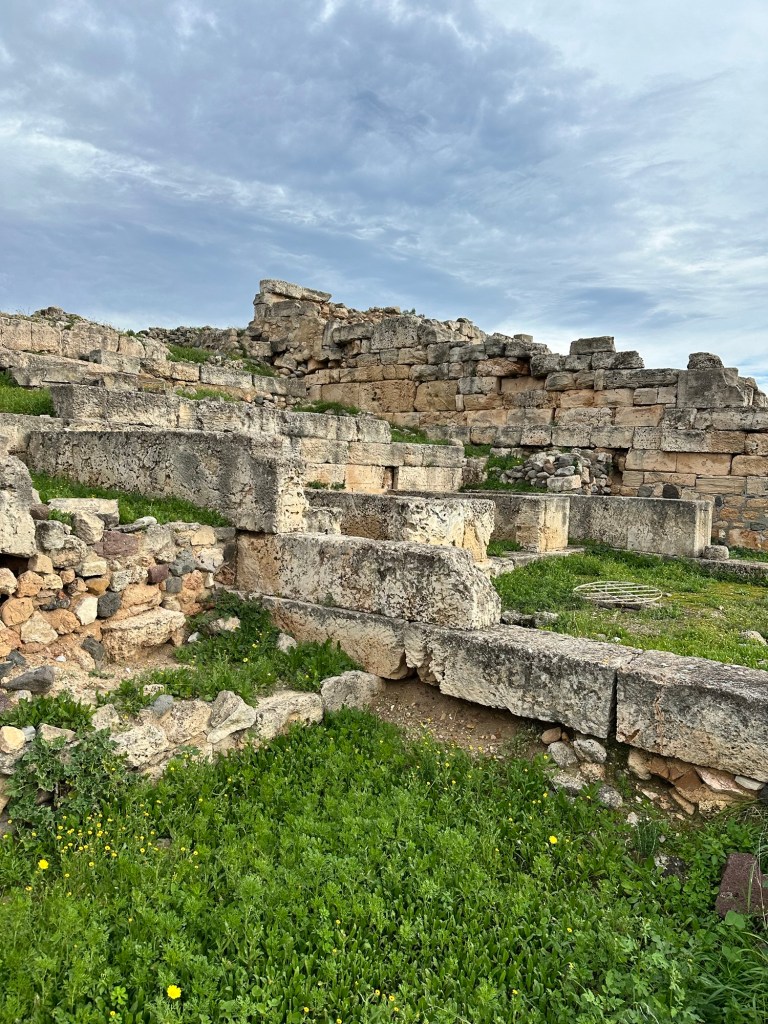
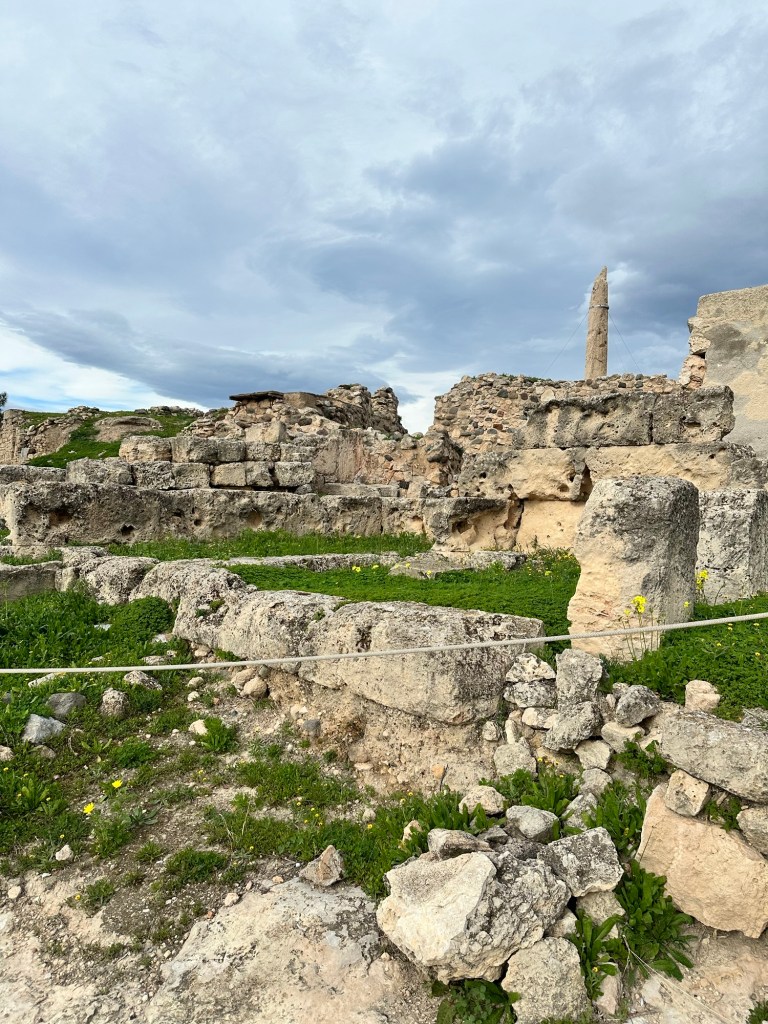
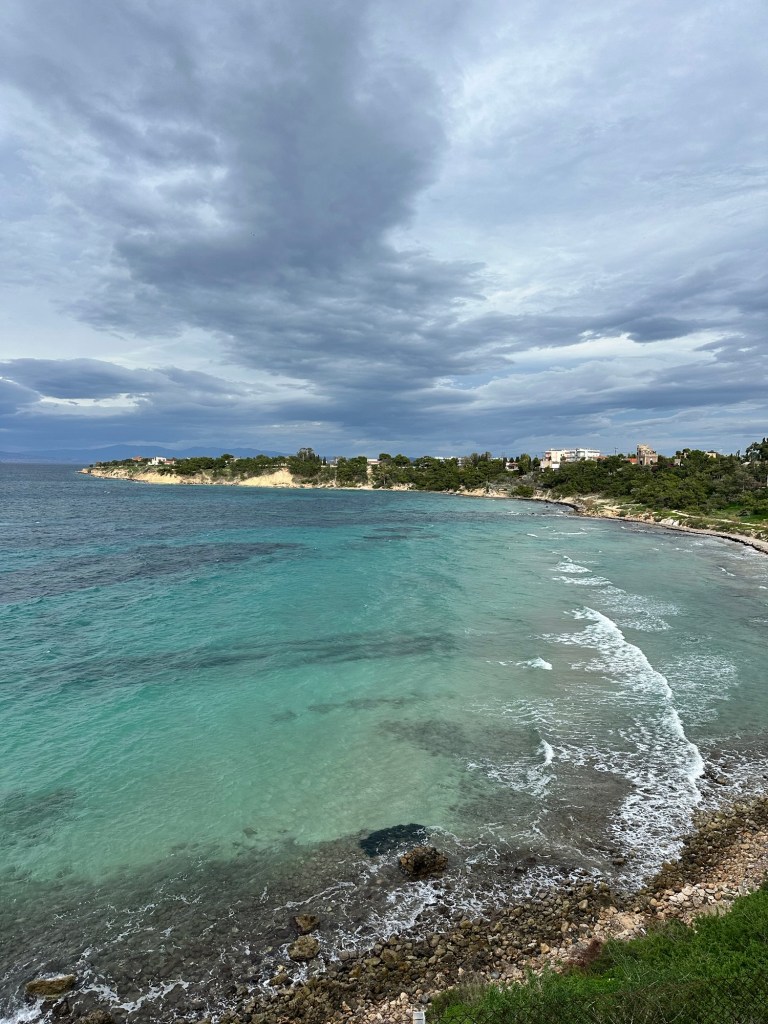
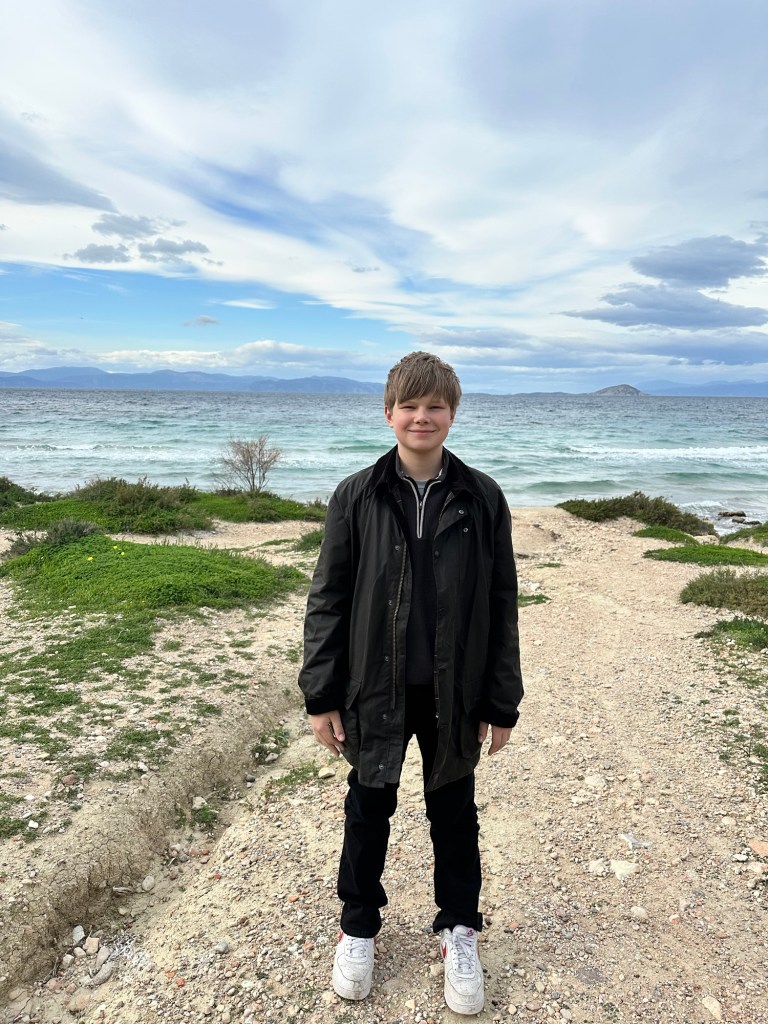
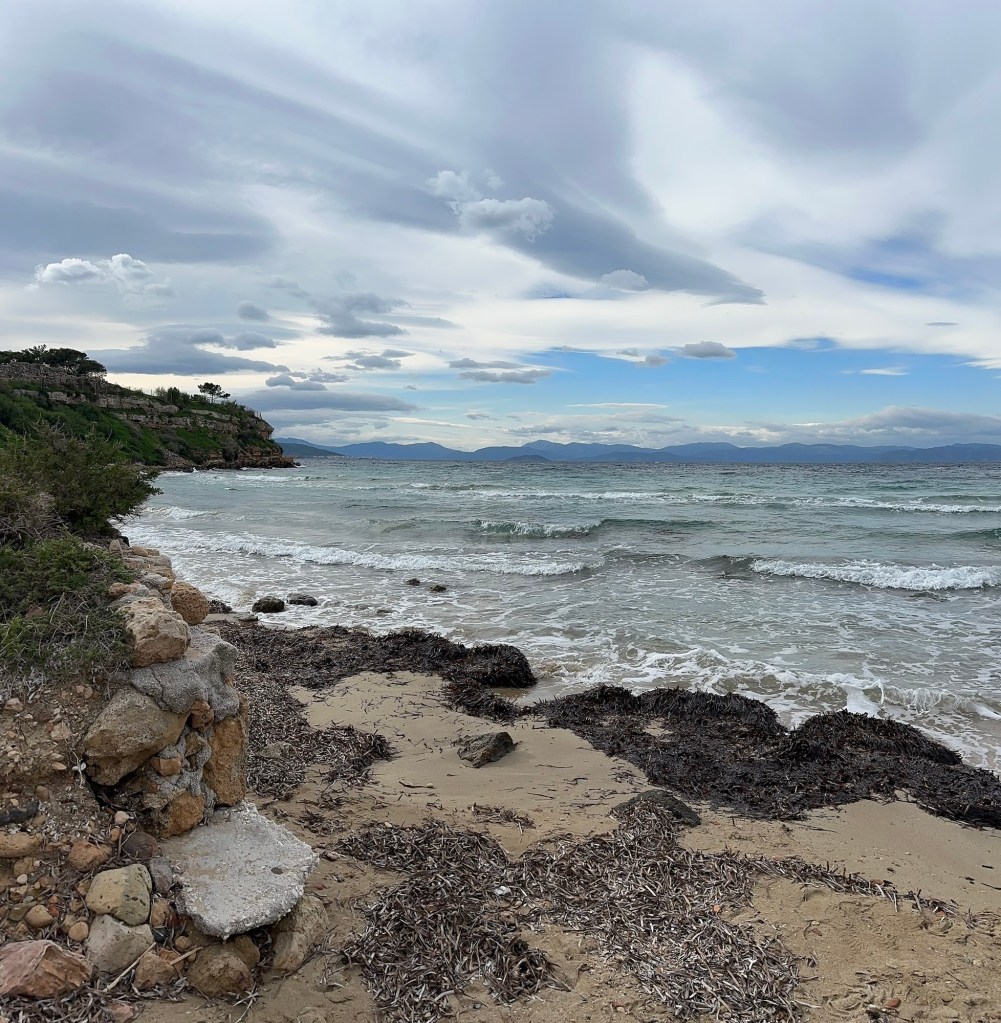
We immediately walked along the coast to the historical ruins we spied from the ferry ride. Along the way we stopped at this mosaic floor from the 4th century AD, which was part of a Jewish Synagogue, it must have been an amazing place to worship. Next we entered the ancient archaeological site and the museum which houses artifacts. Stunning was this massive storage jar, pithos, from 1900-1800 BC. It is at least 7 feet tall. The lighter color is the resin used to restore the pithos back to its original shape and size. The museum was simple and rustic, but it houses artifacts of equal importance and age. The ruins outside are fascinating with the ability to get closer and explore further than the Acropolis with the crowds and roped off areas. While being respectful of the ruins, this site offers a close up and personal way to really feel what it must have been like to live there. The lovely views with the sounds of the ocean waves hitting the shore and rocks were a special experience. While Scott and Connor discussed defensive tactics, I wondered how the heck this was built. We then walked down off the hill to the inlet and shoreline, which must have been where they fished and launched boats. You could see the backside of the site with the walls crumbling into the water. We had a bit of fun taking silly photos and then walked into the fishing village for shopping and lunch.
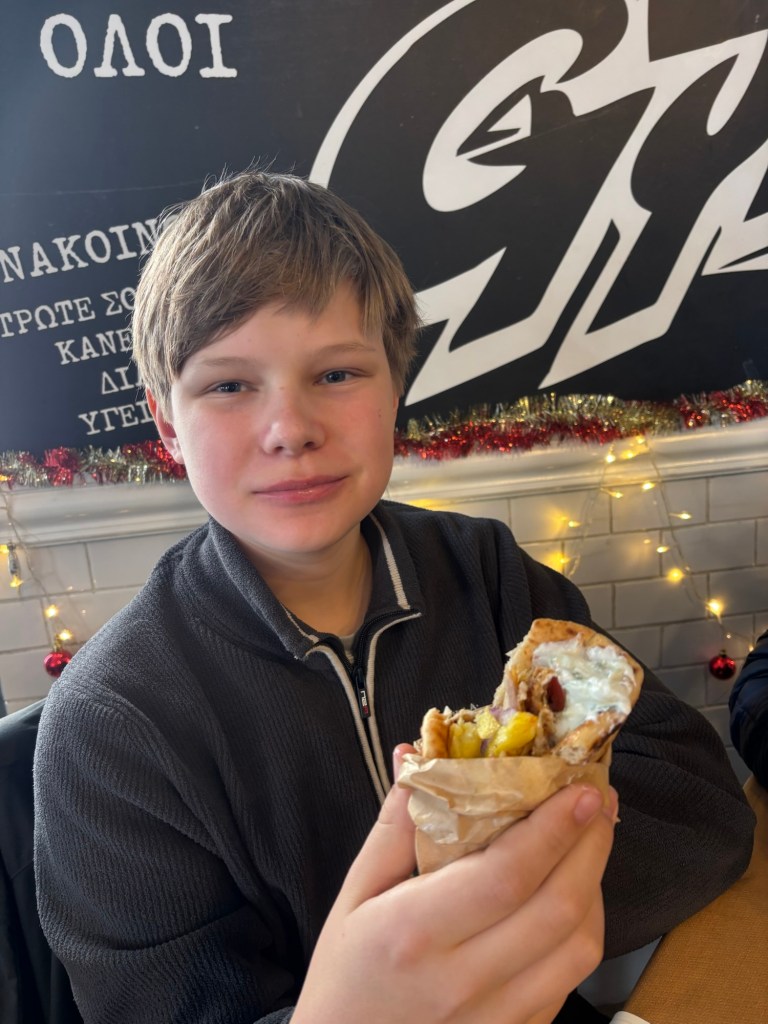
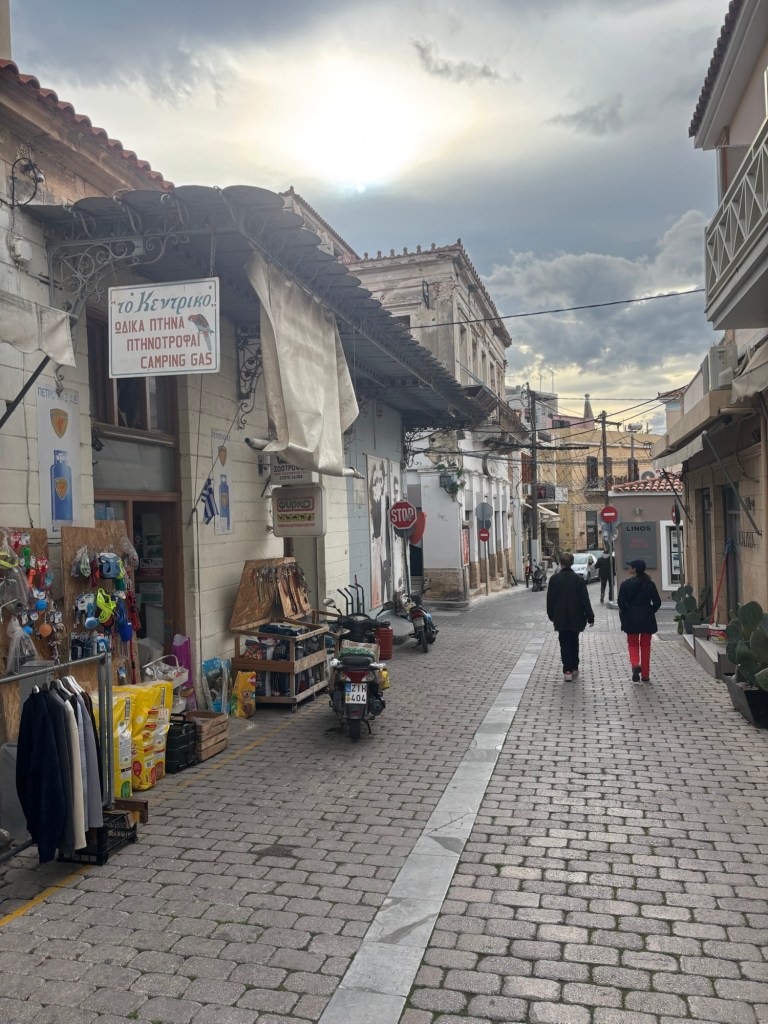
Connor selected the lunch spot, a local gyro restaurant that was really good. The island does have tourism but is also home to local residents. You can always tell when you find several small hardware stores. We bought a few Greek foods to take back with us as we walked to the ferry. Our ferry was late, but we were told “no problem” it will be here even as the weather was becoming very windy and a storm approaching. I was not convinced. We made it back to the hotel for a late dinner of sushi and pad tai that Connor tried and liked.
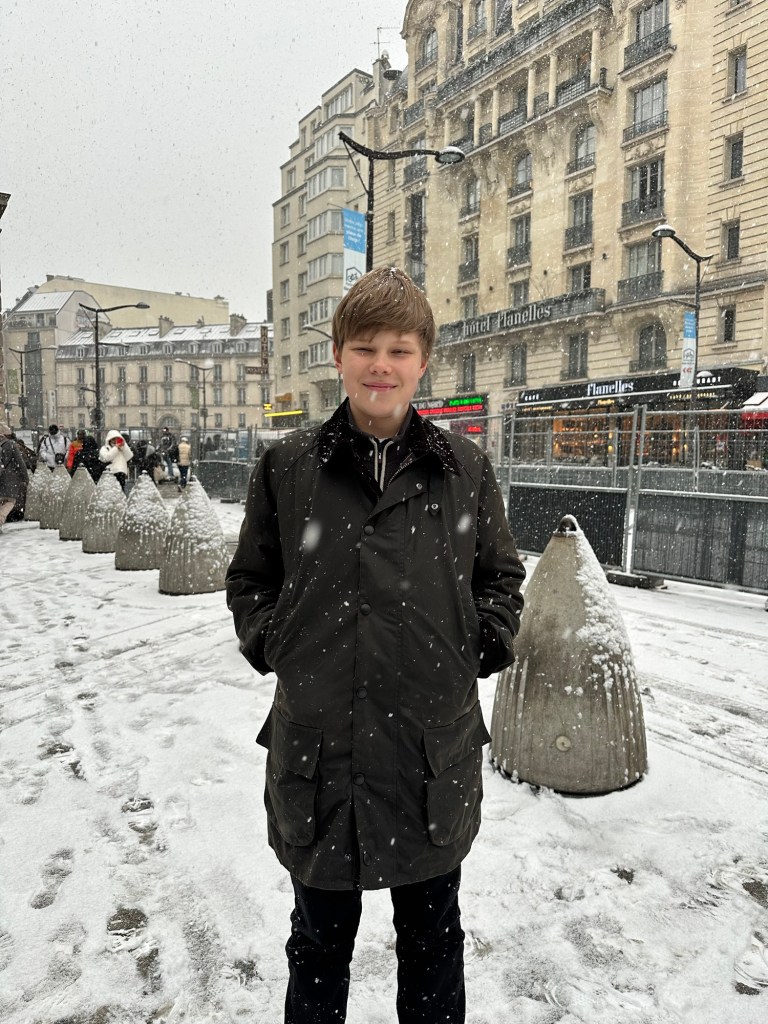
Sunday morning, we left our hotel for the airport, reminiscing about our trip, planning on a noon direct flight back to Brussels. Forty-five minutes before our flight, it was announced that the entire airport was closed due to technical issues. In fact, all airports in Greece were closed. After phone calls, help desks and online chats, we determined there was not going to be a way to get back that day. Greece does not have a good train system as in other parts of Europe. We could have take an overnight ferry to Italy and a flight back, but that seemed a bit much. The airline said they could rebook us on a flight leaving Thursday – Connor was happy to stay and miss school, Scott was not able to miss work. We took the last 3 seats on a flight from Athens to Paris leaving Monday morning, with the hopes that the technical issues would be fixed. Then we booked train tickets from Paris to Brussels. We stayed at a hotel next to the airport, watching empty runways with no activity. The next morning Scott got up early and walked over to the check-in desk (a 4 min walk) to scope out the situation. The airport was open and flights were leaving. We checked in, got through security and on the flight, taking off with an hour delay. Upon landing Paris had been hit with a snowstorm, thankfully we were able to land and take a local commuter train from the airport to the train station. I love this train station in Paris, it is beautiful. However, while the train station is covered, it is not heated. All the trains were delayed, no where to sit, standing in 25degrees with bags. Would we make it from Paris to Brussels? It was uncertain. So, we got warm beverages and went outside to play in the snow. Gotta have fun with a 14-year-old boy who loves the snow! We finally made it back to Brussels around 9pm as Brussels was getting a snowstorm. We ate a quick dinner, and Connor was outside in the snow with his RC car having fun. The past few days have been fun with snow driving our outdoor activities and fires keeping us cozy inside. In the stressful moments, it feels scary and hard! But once safe and looking back I realize what we have accomplished, the joy we have experienced, the memories collected and I am happy. Thank you for reading this long post! Your comments here and to me privately letting me know you have read these means so much. Wishing our friends and family a blessed 2026!













 Delius Diaries
Leave a reply to inspiring6c2b368d34 Cancel reply